
We’re trying something new – a feature where you ask a question about birds, and volunteers at CBA will do their best to answer your question in this space. How do birds do what they do? Why do birds do what they do? They can be such fascinating, puzzling creatures.
To start us out, here’s a story and a question:
One day during the fall, my neighbor’s hedge was packed with raucous sparrows. All at once, they fell silent, two previously unseen Mourning Doves explosively flew right over my head, and a Cooper’s Hawk glided into the linden tree and perched. In the crabapple tree near me a lone Black-capped Chickadee quietly uttered squeaks so high-pitched I could barely hear them. The hawk eventually flew to trees across the street, startling several Rock Pigeons. What was all that about?
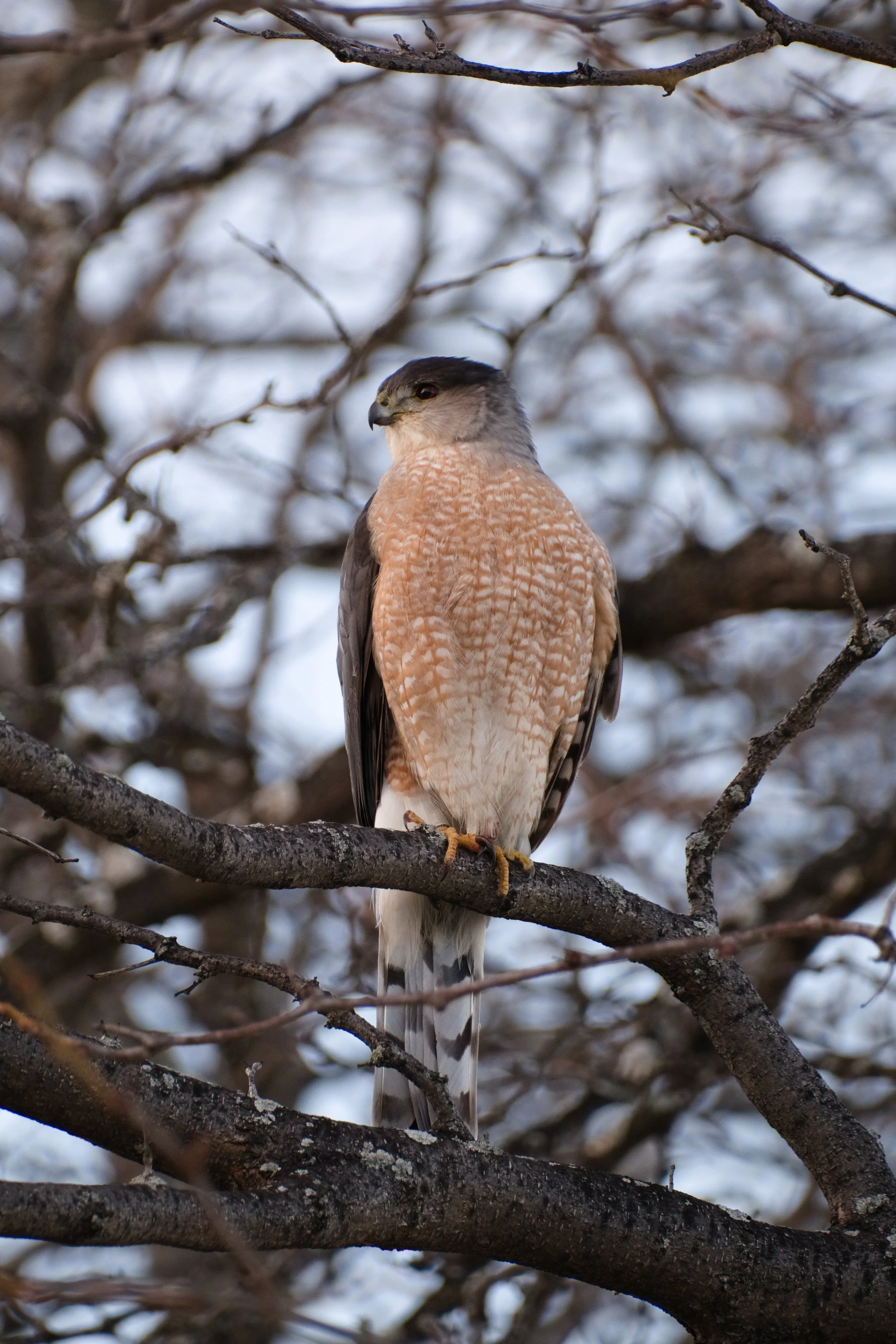
Cooper’s Hawk, female, Milwaukee, Wisconsin
Joseph Skubal/Audubon Photography Awards
Answer: A lot was going on that the unsuspecting human was unaware of. First, the raucous sparrows. It’s possible that they were having an after-lunch chat with each other, or, all that racket could have been alarm calls, signaling that danger was in the area. It’s thought that birds have two different types of alarm calls: mobbing calls and flee alarm calls. Mobbing calls indicate that there’s a predator in the area that is not an immediate or intense threat. The calls alert other birds that there’s work to do here – gather around, and let’s drive the predator away! Flee alarm calls usually mean that there’s a predator in flight, and probably more dangerous. The resulting behavior in this case might be flight or hunkering down.
The House Sparrows could have been alerted by other birds that there was danger in the area, and thus they began to call out. But once the hawk was directly overhead, sudden silence prevailed, which is an alarm in and of itself.
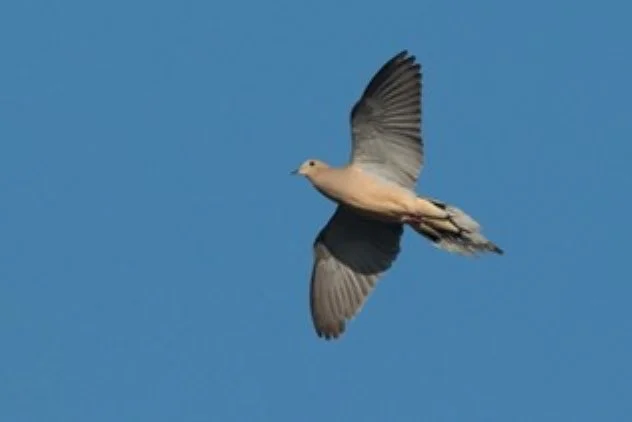
Mourning Dove, Whelan Lake Bird Sanctuary
Mourning Doves aren’t known much for an alarm “call”, per se, but they do create an abrupt noise with their wings when they take flight. Air rushes through their feathers, causing a sudden vibration called wing-whistles. These whistles not only let other Mourning Doves know of potential danger, but have been found to provoke alarm responses in other species of birds. What’s not known is if the purpose of wing-whistles is to raise an alarm.
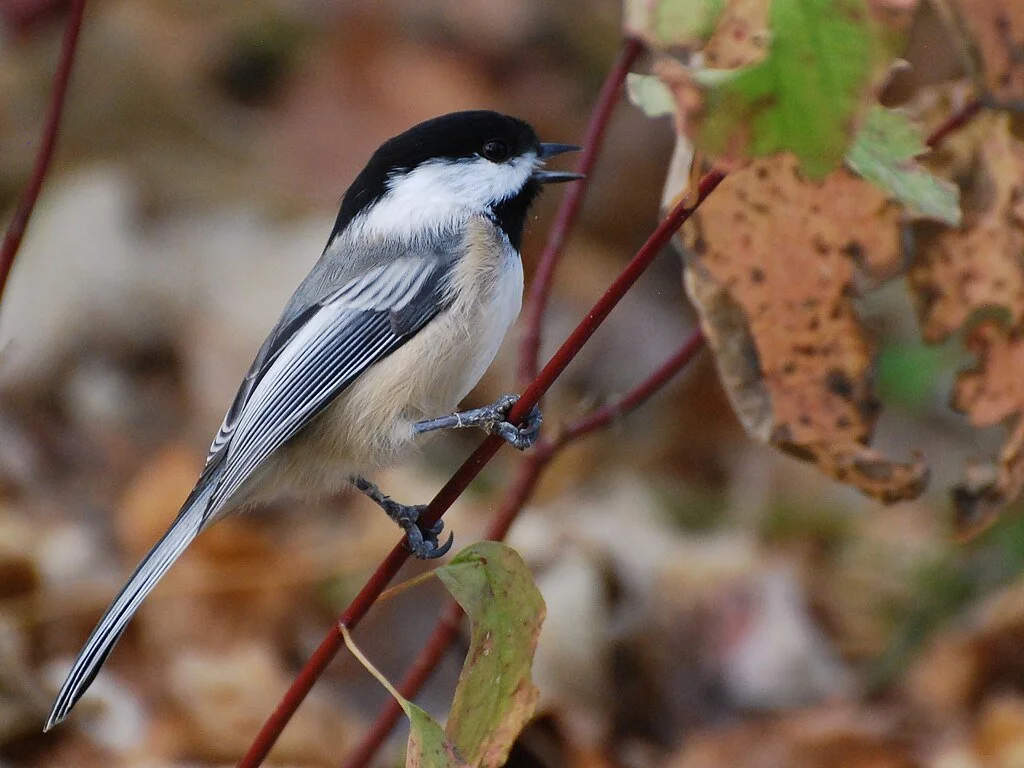
Black-capped Chickadee, Blanche Lake, Minnesota
Tattooeddreamer/Wikimedia Commons
In the case of the Black-capped Chickadee, alarm calls are just a few of the 16 identified vocalizations of chickadees. Chickadees make their namesake chickadee-dee-dee call for several reasons, a few of which provide information about threats. The birds will add an increasing number of dee notes the more dangerous the threat. A large, clumsy predator may only elicit a few dees, but a more agile bird of prey may generate up to 12!
Flee alarm calls have been found to provide locational information – the predator is above or flying, or the predator is on the ground. The squeaking I heard from the chickadee, the high zee, is an intense flee alarm note, given particularly when a fast-approaching predator is detected. The message – Stay Put! In general, flee alarm calls are high-pitched and in a narrow bandwidth, with frequent up-and-down amplitude. This sound will not carry too far, and the source will be difficult for a bird of prey to locate.
What I didn’t know to pay attention to was a chickadee-dee call after the Cooper’s Hawk left. Chickadees will provide an “all clear” signal once the danger has passed.
All of this happened in my backyard, within probably 60 seconds. So much bird behavior is around us all the time! What have you observed or have been puzzled by that you’d like to understand better? Please send us your bird question here, and we’ll do our best to answer in a future blog.
Resources:
A Beginner’s Guide to Common Bird Sounds and What They Mean | Audubon
Coleman, S.W. Mourning dove (Zenaida macroura) wing-whistles may contain threat-related information for con- and hetero-specifics. Naturwissenschaften 95, 981–986 (2008). https://doi.org/10.1007/s00114-008-0404-x
10 Fun Facts About the Mourning Dove | Audubon
https://birdsoftheworld-org.proxy.birdsoftheworld.org/bow/species/bkcchi/cur/introduction
The bird way: a new look at how birds talk, work, play, parent and think. Jennifer Ackerman. Penguin Press, 2020.
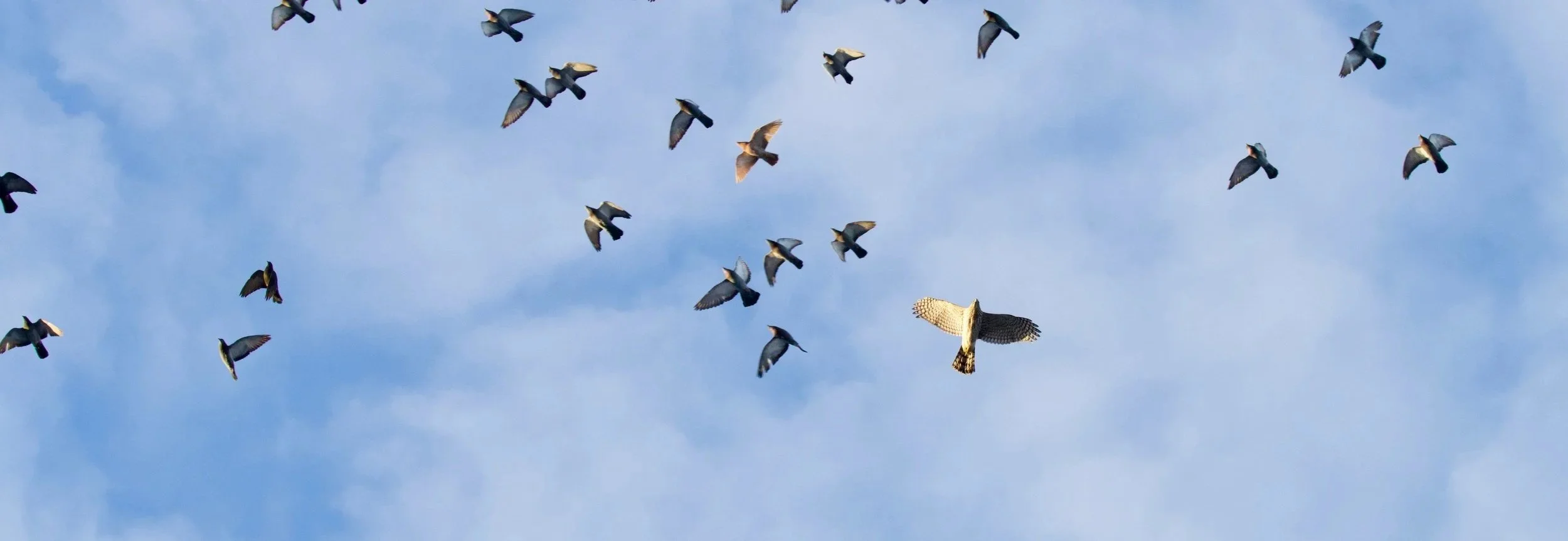
Header photo: Cooper's Hawk, juvenile, and Rock Pigeon, Boston Common, Massachusetts
Brian Rusnica/Audubon Photography Awards