
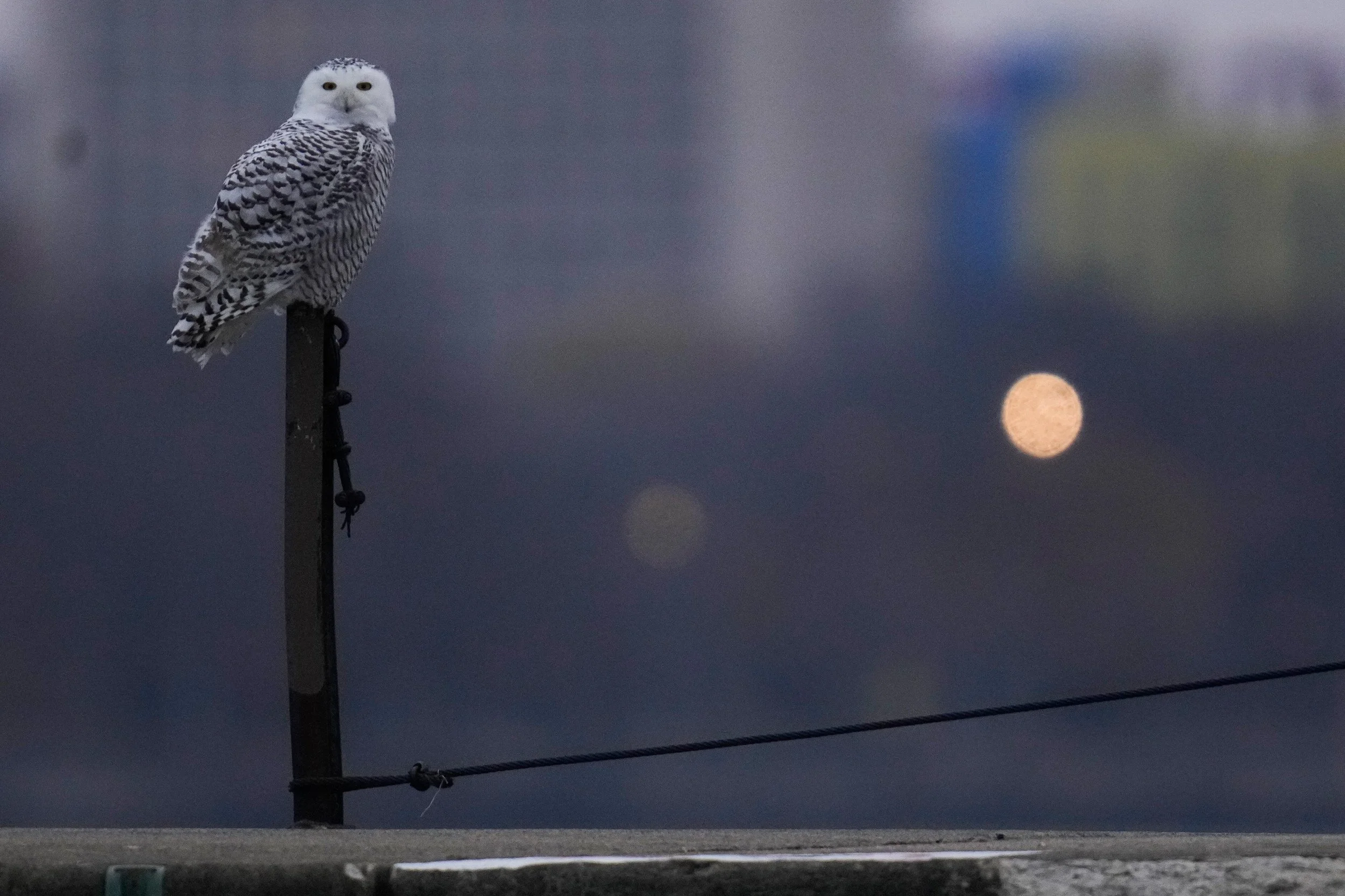
As December approached with freezing temperatures and the birding community of Chicagoland was gearing up for the upcoming Christmas Bird Count, some Arctic visitors came flying down from the North to give birders a little headstart on the count. Two Snowy Owls were the buzz among Chicago birders right as November was coming to a chilly end, as if these stunning birds with feathers as white as snow heralded the coming winter wonderland that was approaching Illinois.
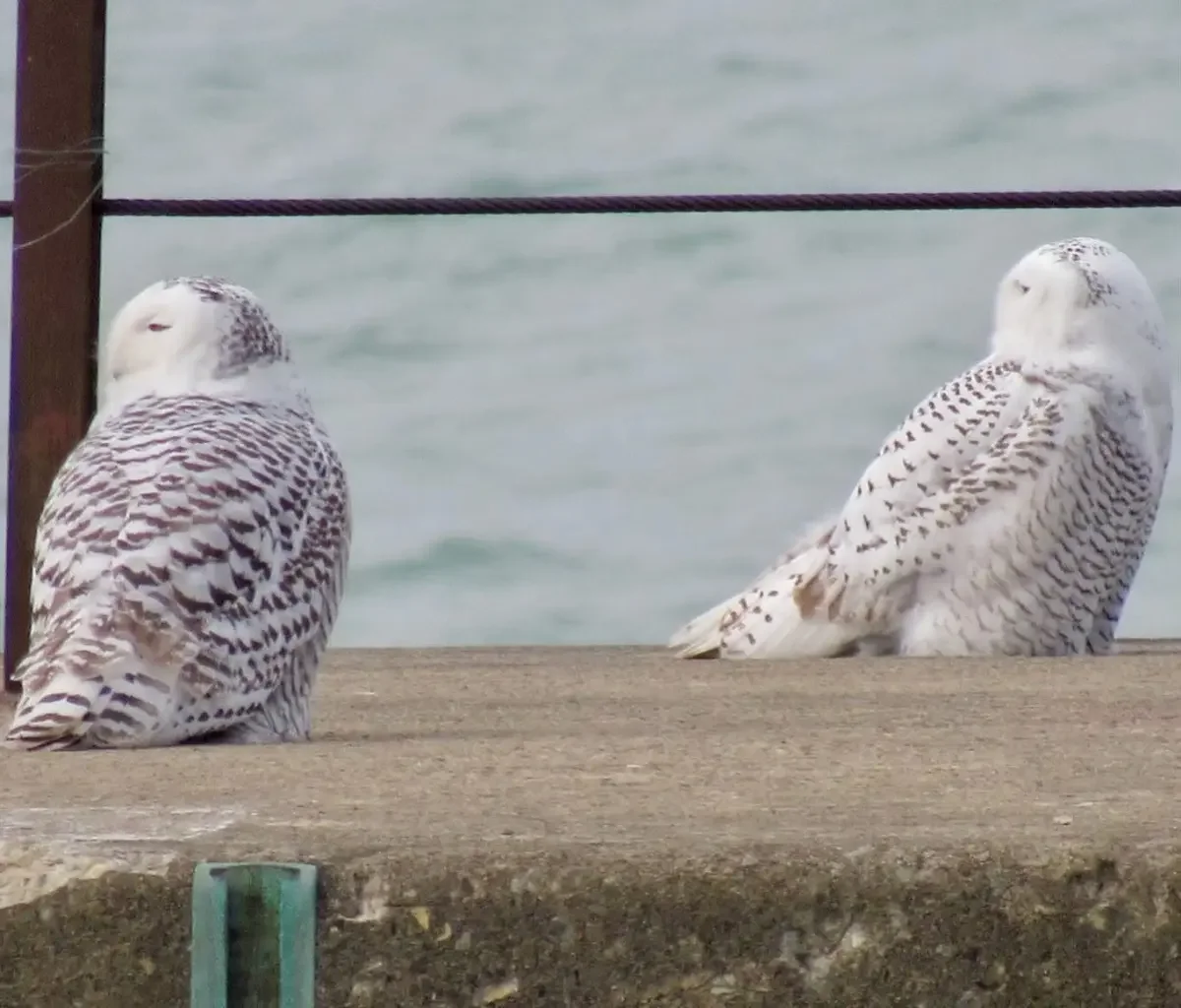
The visiting Snowy Owls at Montrose Point Bird Sanctuary during the later half of November. Photo by Chicago Park District.
Snowy Owls are uncommon around this region as they usually live far up north, primarily in Canada and Alaska. Occasionally, a Snowy Owl will travel this far south due to Arctic temperatures that come with winter, like the Snowy Owl that visited the Lakefront on Chicago’s South Side around this time last year.
Given that they prefer tundra environments, including those with beaches and shorelines, it’s no surprise that Chicago’s frozen winters are perfect for Snowy Owls on occasion. It was especially exciting this year with two Snowy Owls roosting at Montrose Point Bird Sanctuary for a brief period, with a third owl sighted as well. However, while the Snowy Owls were captivating to observe, many birders quickly reminded the community at large about the importance of respecting the space of the Snowy Owls, as with all owls, during this time of year, when food resources are scarce, and human disturbance can add stress.
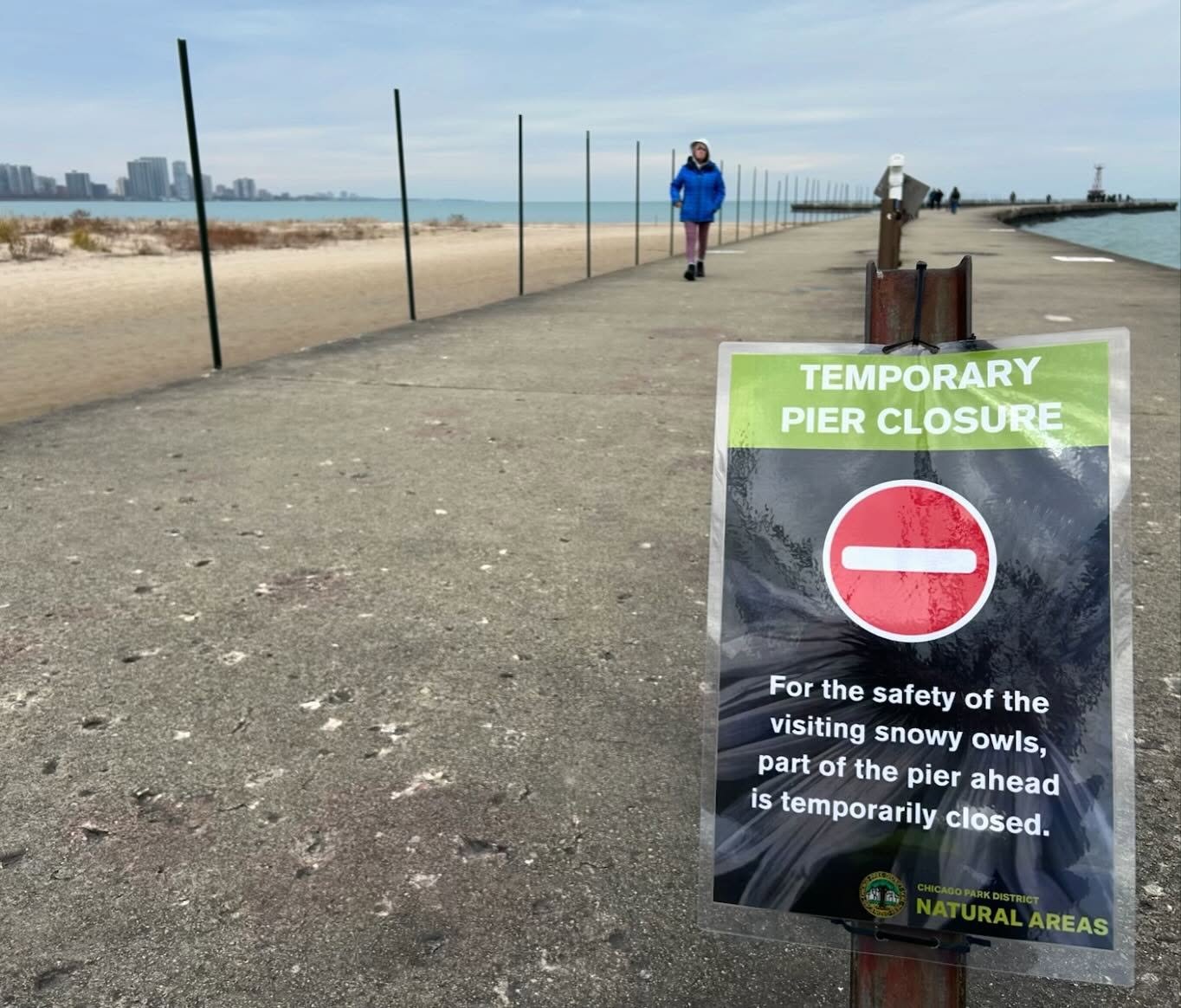
To ensure the safety of the Snowy Owls, the pier at Montrose Point Bird Sanctuary was temporarily closed. Photo by the Chicago Park District.
The stress caused by human presence can disrupt food hunts, taking a toll on owls and their young. This is especially perilous for Snowy Owls, given that, according to a 2024 study published in the Cambridge University Press by members of the International Snowy Owl Working Group and Project SNOW Storm, there are reportedly fewer than 30,000 breeding adults, a 30% decline over three generations during the past 25 years. Despite their breeding range being remote in the frigid Arctic Circle, limiting the risk of human interference, climate change has likely negatively impacted Snowy Owls, resulting in a vulnerable species red list status designation in 2021 by the International Union for Conservation of Nature (IUCN).
With this in mind, what can you do to ensure that Snowy Owls are treated with respect and care?
If you happen to observe these owls, it’s best to keep a respectful distance, allowing a wide space between you and them during the wintertime, ensuring that they can live and hunt comfortably. If the owl notices you and keeps looking at you, you're too close. In the case of the visiting Snowy Owls, the Chicago Park District asked birders at Montrose Point to stand no less than 300 ft away from the tundra raptors. Not only is it best to maintain distance, but you should also avoid making loud sounds, refrain from using flash photography, and never bait or flush an owl out with food. Instead, stay in the sidelines of the owls’ territory and use blinds to minimize your presence while observing with binoculars and/or telephoto lens on a camera, as well as staying silent with nothing above a whisper. Most of all, keep the owls' location discreet to only those who can responsibly observe them. This way, there will be less human traffic in the owls’ territory, thus preventing them from feeling stressed or distracted.

A large group of passionate birders observing and photographing the visiting Snowy Owls while maintaining the proper distance of 300 ft at Montrose Point Bird Sanctuary. Photo by the Chicago Park District.
Following these steps will protect not only the Snowy Owls, but all other owls in the Chicagoland area during the winter season, and will allow other birders to safely observe them as well.
For a more detailed look at respecting owls, we have several of our articles linked below that are more in-depth about birding properly around owls, especially Snowy Owls, at this time of year.
The Up & Up: What's Up With Owls? - Drew McPartlin, December 19, 2020
CAS adopts Owl Friendly Photo Policies on Facebook - Ann Hetzel Gunkel, January 28, 2022
Respecting Owls: Ethical Owl Viewing and Photography - Judy Cheske, November 19, 2023
Winter Birding in Chicago - Matthew Igleski, February, 17, 2025
Additional Resources
Snowy Owl Overview - All About Birds, Cornell Lab of Ornithology
The International Snowy Owl Working Group
Snowy Owl - IUCN Red List, July 23, 2021
A Guide to Responsible Owl Viewing - Indiana Audubon, November 25, 2024
Snowy Owls Delighting Birders on Chicago’s Lakefront - WTTW, November 21, 2025
Chicago Park District Limits Access to Snowy Owls, Citing Safety Concerns. Here’s What to Know About the Arctic Visitors - WTTW, November 24, 2025
A pair of snowy owls spotted along Lake Michigan beach draws crowds in Chicago - Chicago Sun-Time, November 24, 2025
Bird watchers perch at Montrose Beach as snowy owls make early Chicago appearance - Chicago Sun-Time, November 25, 2025
Snowy owl pair spotted in Chicago along Lake Michigan beach draws crowds - CBS News, November 25, 2025
The Do’s — and Definite Don’t’s — of Snowy Owl Photography - Project SNOW Storm, November 29, 2025
Sask. conservationists say trend of live-baiting snowy owls for photos endangers the birds - CBC, November 29, 2025
Cover photo of one of the Snowy Owls at Montrose Point Bird Sanctuary by Erin Hooley.