
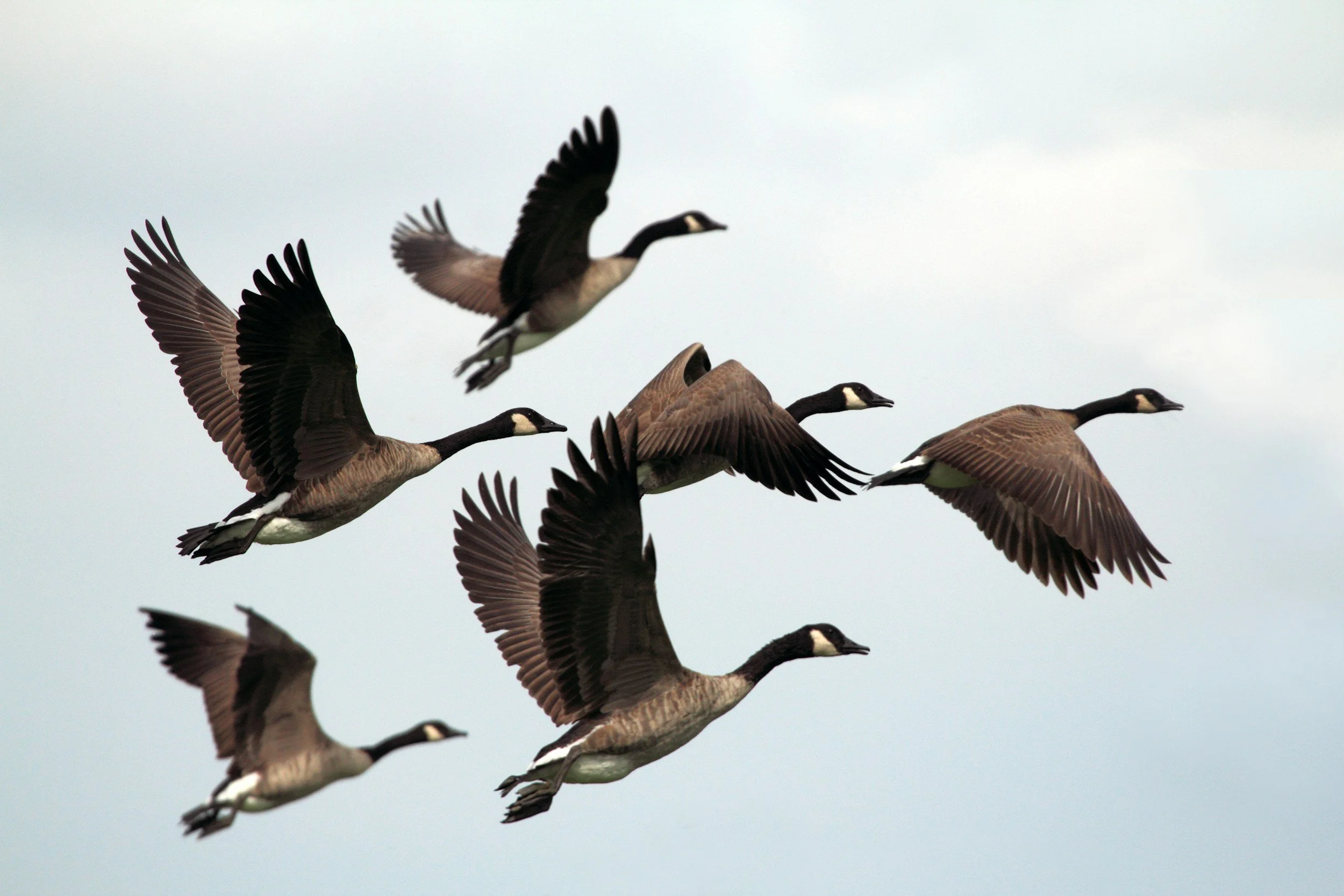
Believe it or not, Fall Migration for birds is already underway in Chicagoland.
34,100 birds flew over Cook County the night of August 1, BirdCast’s first day of Fall Migration tracking. This is not much compared to the hundreds of thousands of birds' passages expected around September, but things are getting started.
Some of the first species to arrive in Northern Illinois are shorebirds, such as Greater Yellowlegs, spotted as early as July. Greater Yellowlegs adults usually journey south weeks before their offspring, leaving the juveniles to migrate on their own.
Fall bird migration is much more drawn out than in spring, spanning almost five months. Though there is no concentrated peak, you may have a longer time period to see a migrating bird. Take the Blackburnian Warbler for example. eBird’s data show they can be commonly spotted in Illinois for three weeks in the spring, but during fall migration we have six weeks to catch sight of them.
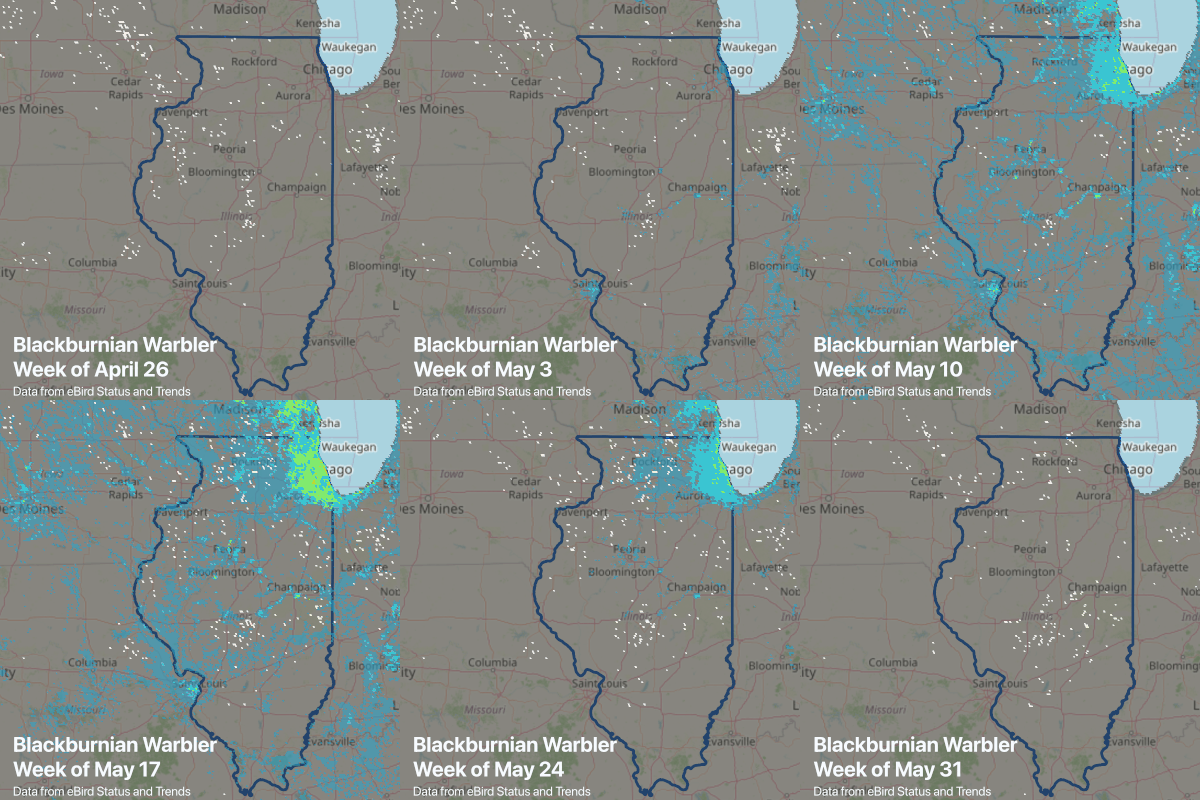
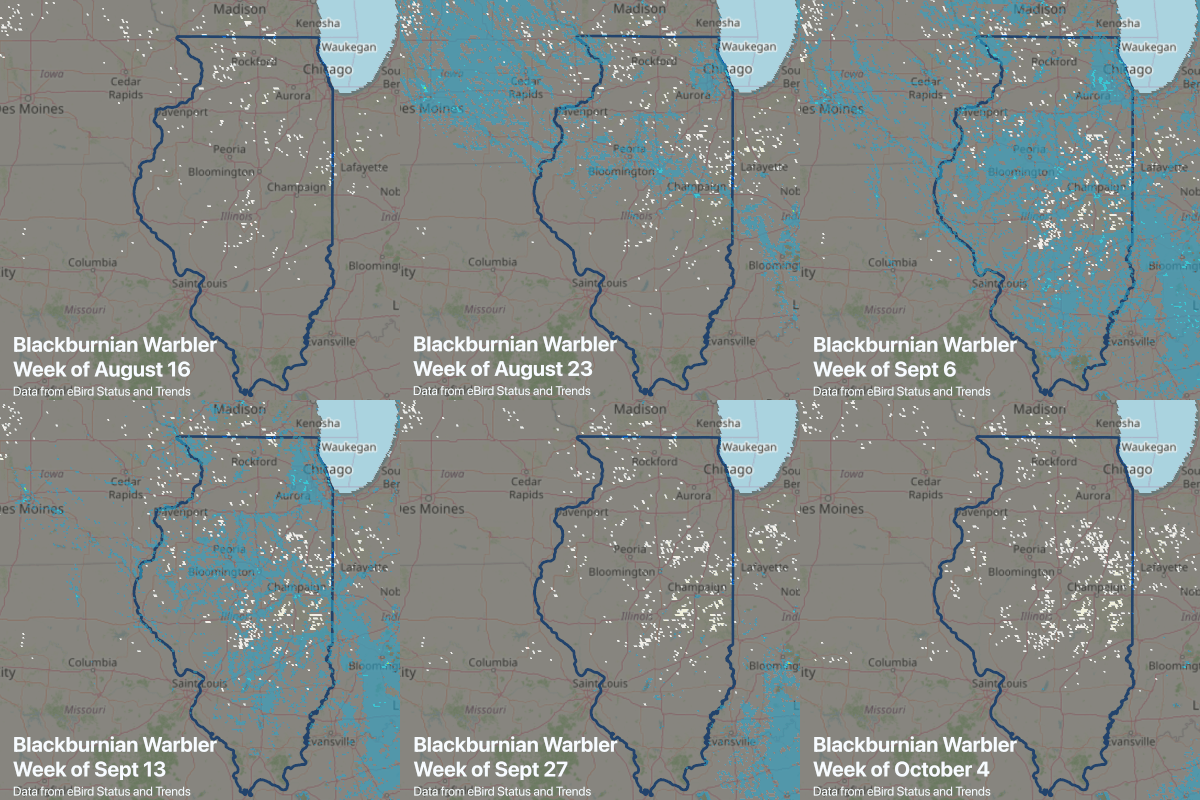
Density of Blackburnian Warbler during spring and fall migration 2023. Data from eBird Status and Trends, Cornell Lab of Ornithology
With Fall Migration underway, it’s time for another reminder to make our cities safe for birds.
Birds often hit buildings because they see the reflected surface and think it’s an open sky. Other times, transparent glass causes birds to think there’s no obstacle between the indoor and outdoor space.
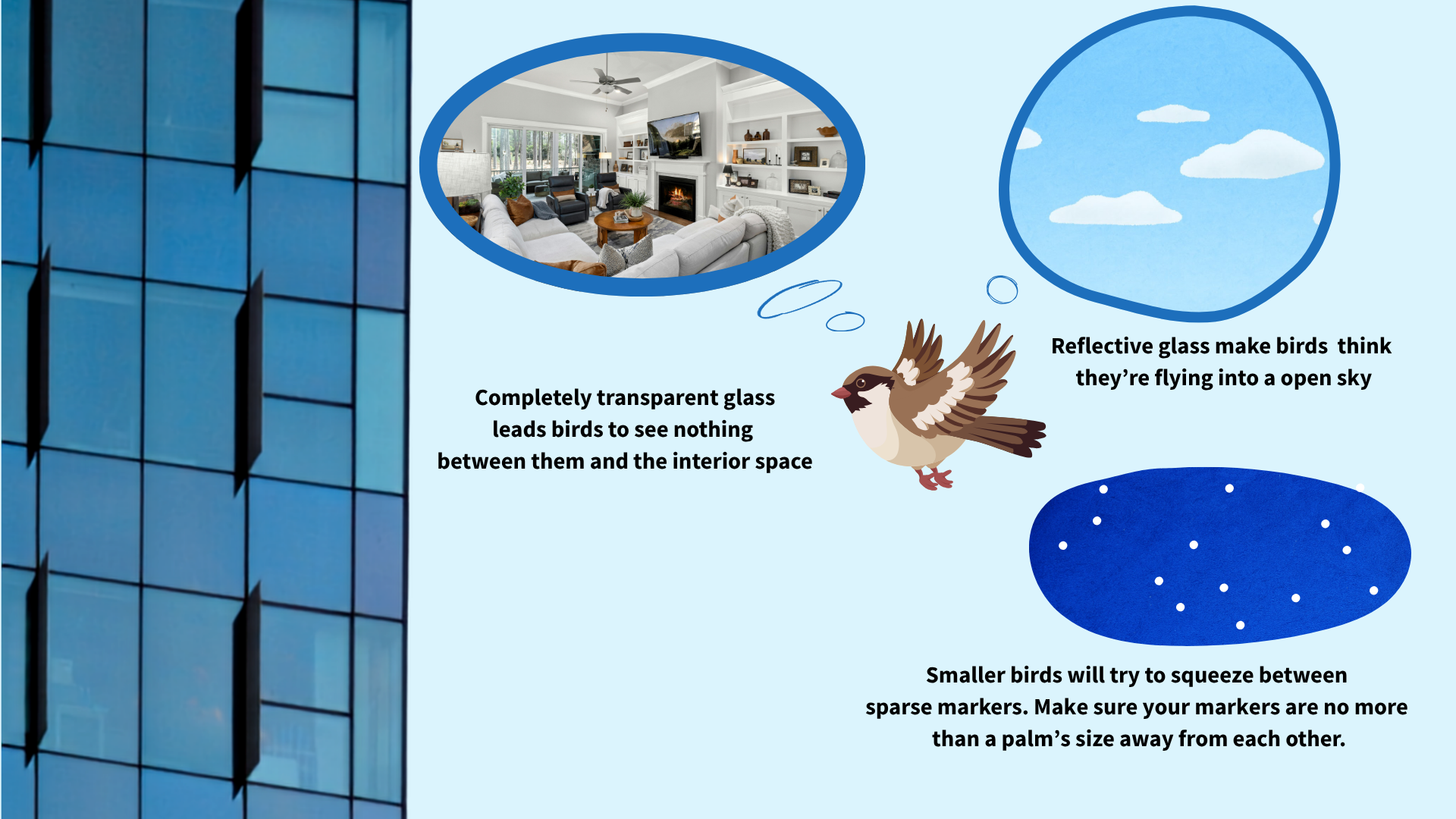
Patterns on the outside of glass break up reflections and mark the window itself. UV coatings can also be applied to deter birds, although they do not work for all species.
The 2x4 rule of bird-friendly glass requires visual markers to be spaced no greater than 2 inches horizontally and 4 inches vertically. The pattern breaks up reflections and prevents birds from mistaking the glass for an open, safe space to fly through.
Tighter spacing such as 2”x2” improves safety for smaller birds who may think they can squeeze between a 2x4 grid of dots. Prioritize bird-proofing your windows near trees or water, as these places attract more birds.
You can always DIY bird-friendly glass by applying a film of protective markers or painting markers yourself. Tempera paint and soap are wallet-friendly, durable materials that can be used. You can paint shrubs, trees, or anything that suits your desire - just remember to do it on the outside surface and follow the density rule.
Most birds migrate after sunset. If you live in a high-rise, turn off lights or draw blinds at night to help prevent birds from being confused by artificial light. You can learn more about LightsOut Chicago here.
Finally, report injured birds to Chicago Bird Collision Monitors. They can be reached at 773 988 1867 (call, don’t text). You can even become a collision monitor by attending a training session.
Don’t forget to go out and have fun birding!
This material uses data from the eBird Status and Trends Project at the Cornell Lab of Ornithology, eBird.org. Any opinions, findings, and conclusions or recommendations expressed in this material are those of the author(s) and do not necessarily reflect the views of the Cornell Lab of Ornithology.
Sources:
Fall Migration at Montrose Point Bird Sanctuary, Owen Deutsch, https://owendeutsch.com/fall-migration-at-montrose-point-bird-sanctuary/
The Feathered Friends of Fall Migration, Lake County Nature, https://lakecountynature.com/2020/10/22/the-feathered-friends-of-fall-migration/
Bird Migration, All About Birds, https://www.allaboutbirds.org/news/the-basics-how-why-and-where-of-bird-migration/
Blackburnian Warbler Data. Fink, D., T. Auer, A. Johnston, M. Strimas-Mackey, S. Ligocki, O. Robinson, W. Hochachka, L. Jaromczyk, C. Crowley, K. Dunham, A. Stillman, C. Davis, M. Stokowski, P. Sharma, V. Pantoja, D. Burgin, P. Crowe, M. Bell, S. Ray, I. Davies, V. Ruiz-Gutierrez, C. Wood, A. Rodewald. 2024. eBird Status and Trends, Data Version: 2023; Released: 2025. Cornell Lab of Ornithology, Ithaca, New York. https://doi.org/10.2173/WZTW8903