
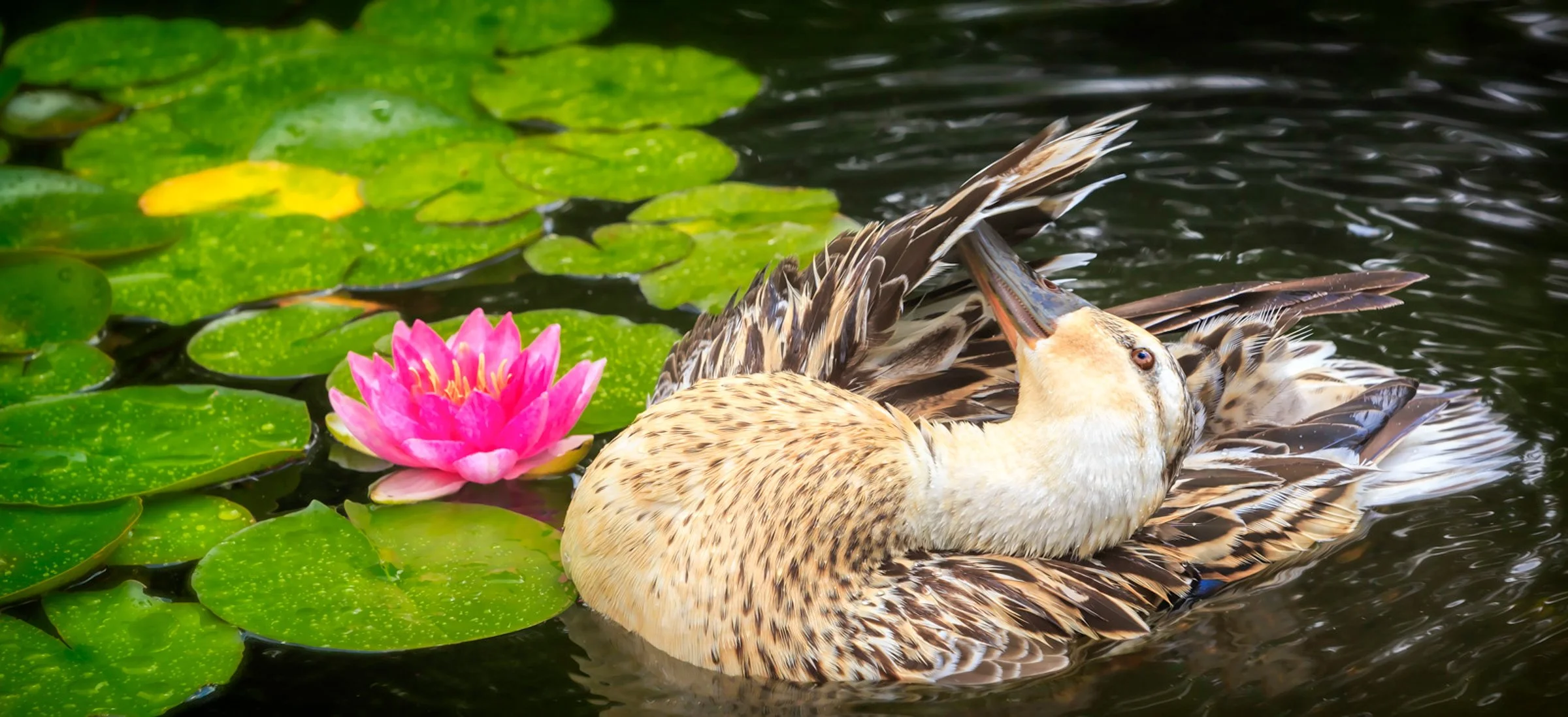
The whole month of May might feel like the biggest holiday for birders here in the Midwest, but did you know about another special holiday coming up? This May 22-25, we’re celebrating Female Bird Day, which the Galbatrosses started in 2020.
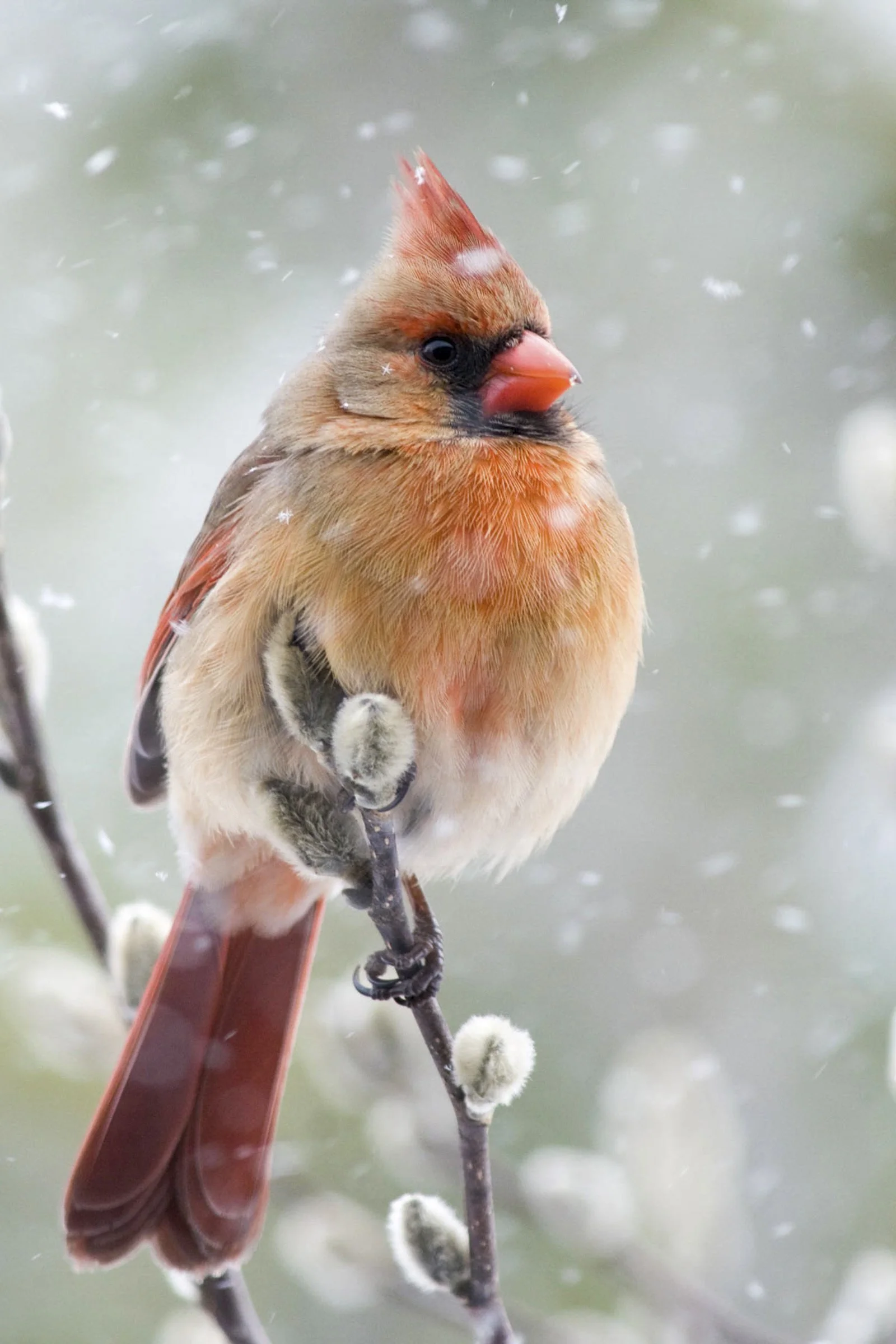
Northern Cardinal. Photo: Michele Black/Audubon Photography Awards
If you haven’t heard of Female Bird Day or the Galbatrosses, we’re a motley crew of scientists, journalists and communications specialists who bonded over a shared love of birding, and the recognition of the need to shine a spotlight on female bird biology. Female birds have long been understudied in ornithology, due in part to their tendency to be more cryptic in behavior and plumage. However, we now know that leaving females out of the picture can be a major problem. Ultimately, if we only pay attention to male birds, who tend to be (but are not always) more colorful and vocal, we might not pick up on differences in migration timing or wintering locations between the sexes. This might further lead to biased decisions for land management and conservation.
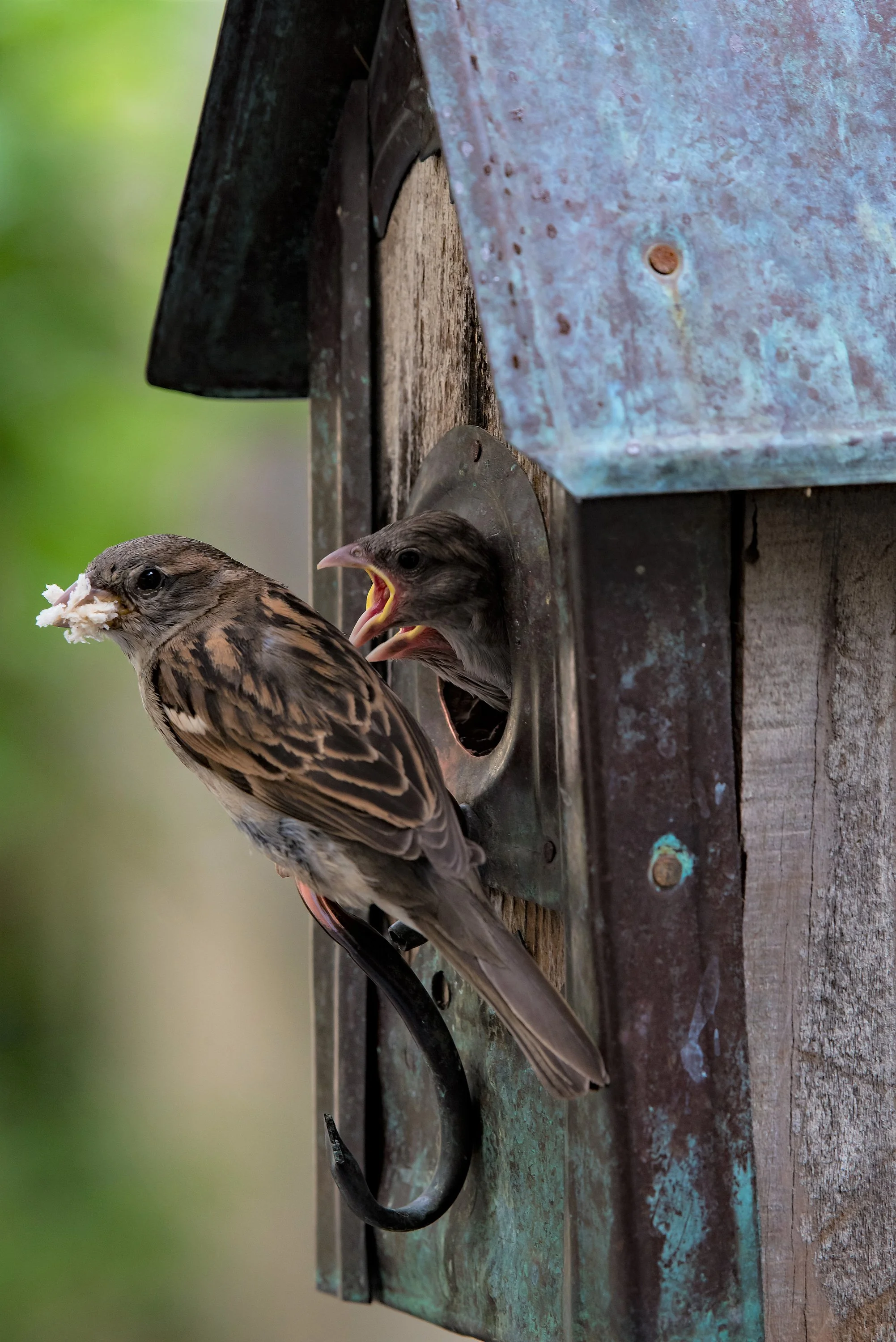
House Sparrow. Photo: Layne Naylor/Audubon Photography Awards
When the Galbatrosses kicked off Female Bird Day, our goal was to help get the word out about female birds and to encourage people to pay more attention, whether they’re birders, scientists, or really anyone who’s ever picked up a pair of binoculars on a whim. On Female Bird Day, we want you to help us look for female birds, and share your observations with a friend, neighbor, or your social media following.
If you’re up for the challenge of looking for female birds this weekend, a bird field guide (such as the Sibley Guide to Birds) will help with species that are sexually dimorphic: that is, those where the sexes of a species look notably different. For starters, here are some birds that have male & female plumage differences and can be found right in your backyard: House Sparrow, House Finch, American Goldfinch, Downy Woodpecker, and Northern Cardinal.
Once you’re comfortable spotting female and male birds at home, try visiting a nearby natural area, such as your nearest wetland or woods. These areas can be a bit more challenging if you’ve been birding more open spaces, especially since birds can easily hide in the tree canopy or within a dense bed of cattails, and females tend to be even more cryptic than males. But now is about the time you might spot a female Mallard with ducklings in tow, or a female Red-winged Blackbird building her nest. “Red-winged Blackbird” is a classic example of a common name based on the male plumage, but the female actually isn’t black at all; rather, she is mostly brown and striped like her background of reeds. If you’re lucky though, you might still spot her more muted red shoulder patch.
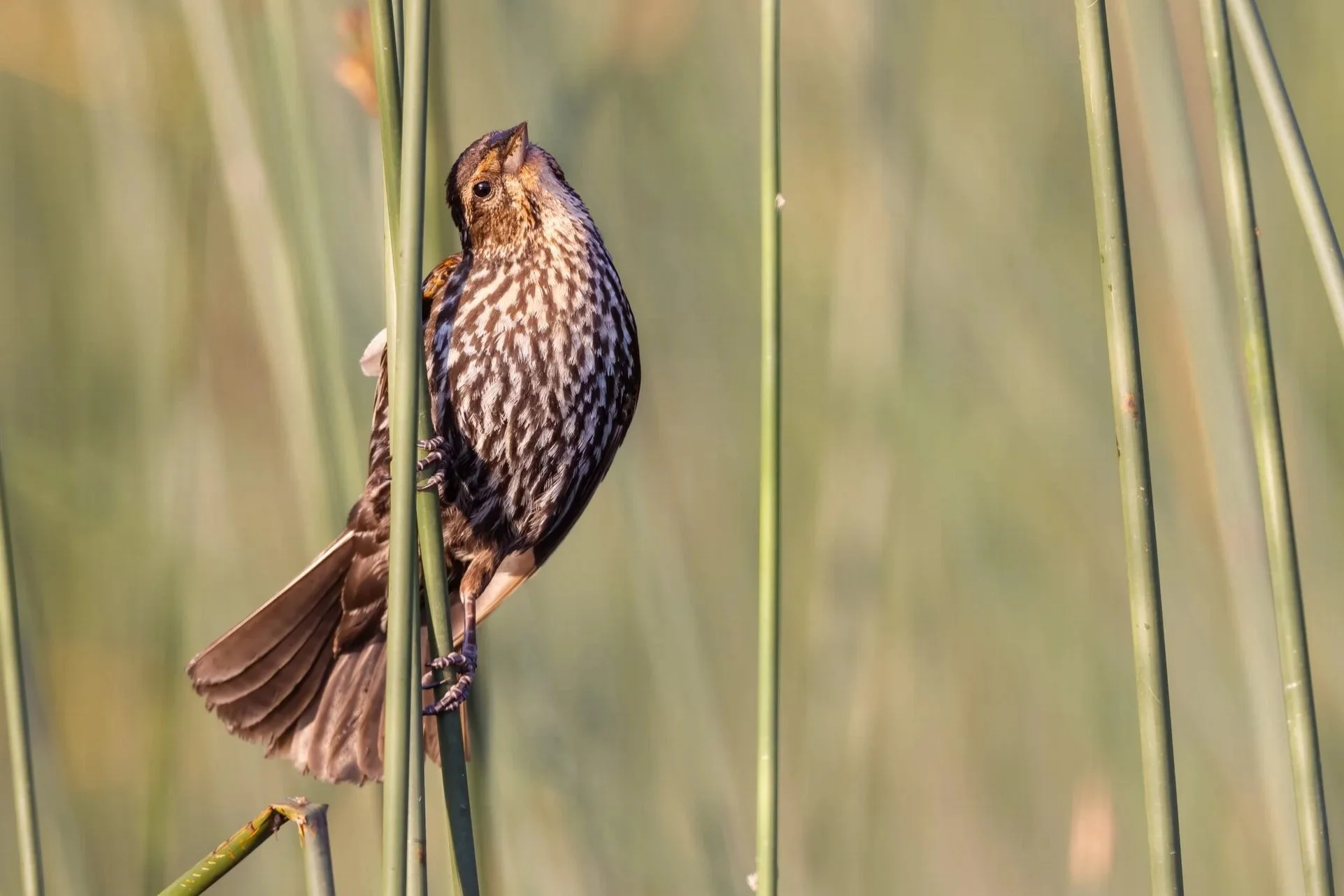
Red-Winged Blackbird. Photo: Louis Martin/Audubon Photography Awards
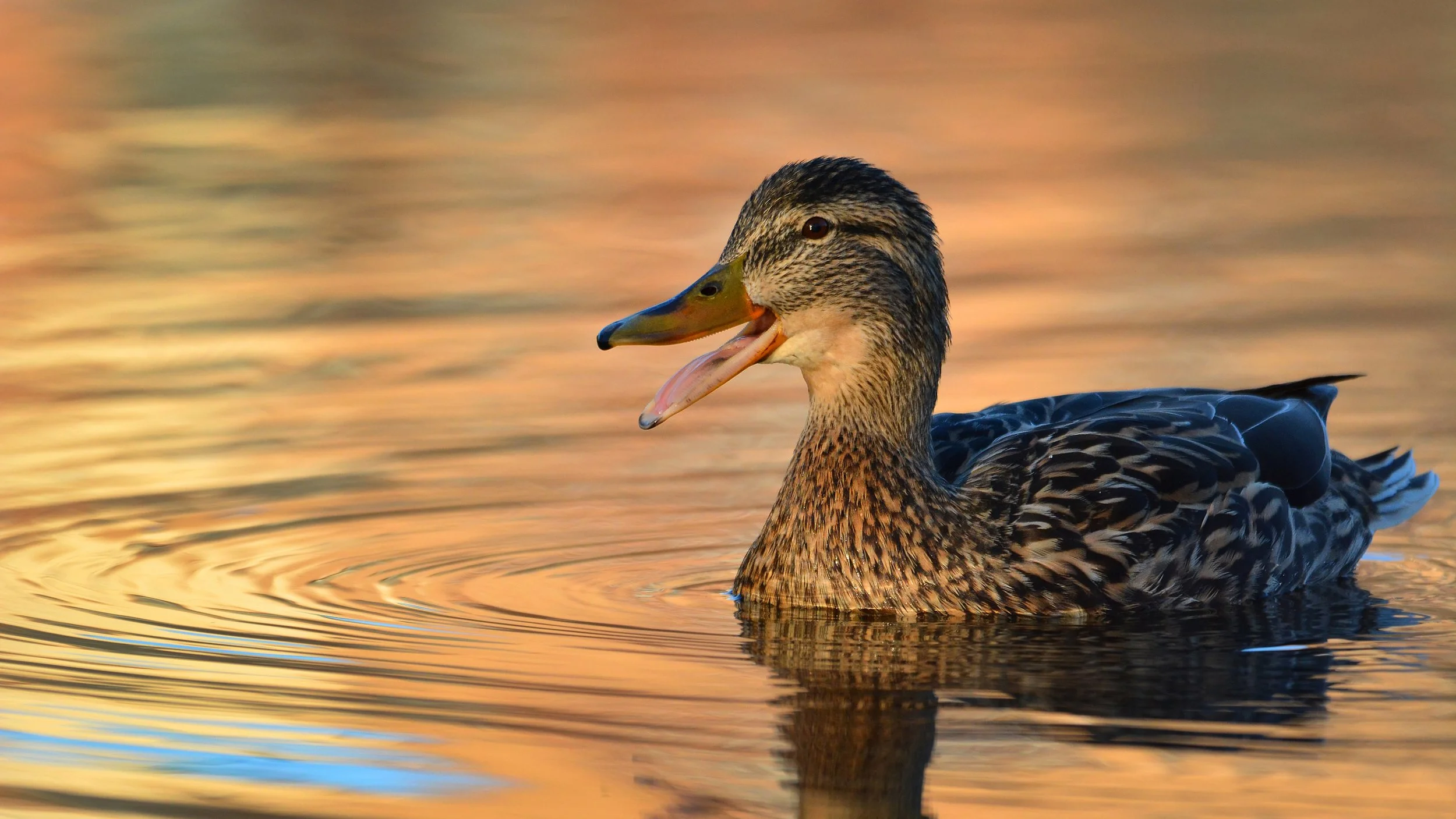
Mallard. Photo: Travis Bonovsky/Audubon Photography Awards
For those species where the differences between the sexes don’t meet the eye, here are some tips:
1. ‘Tis the season where love is in the air–look for the following behaviors…
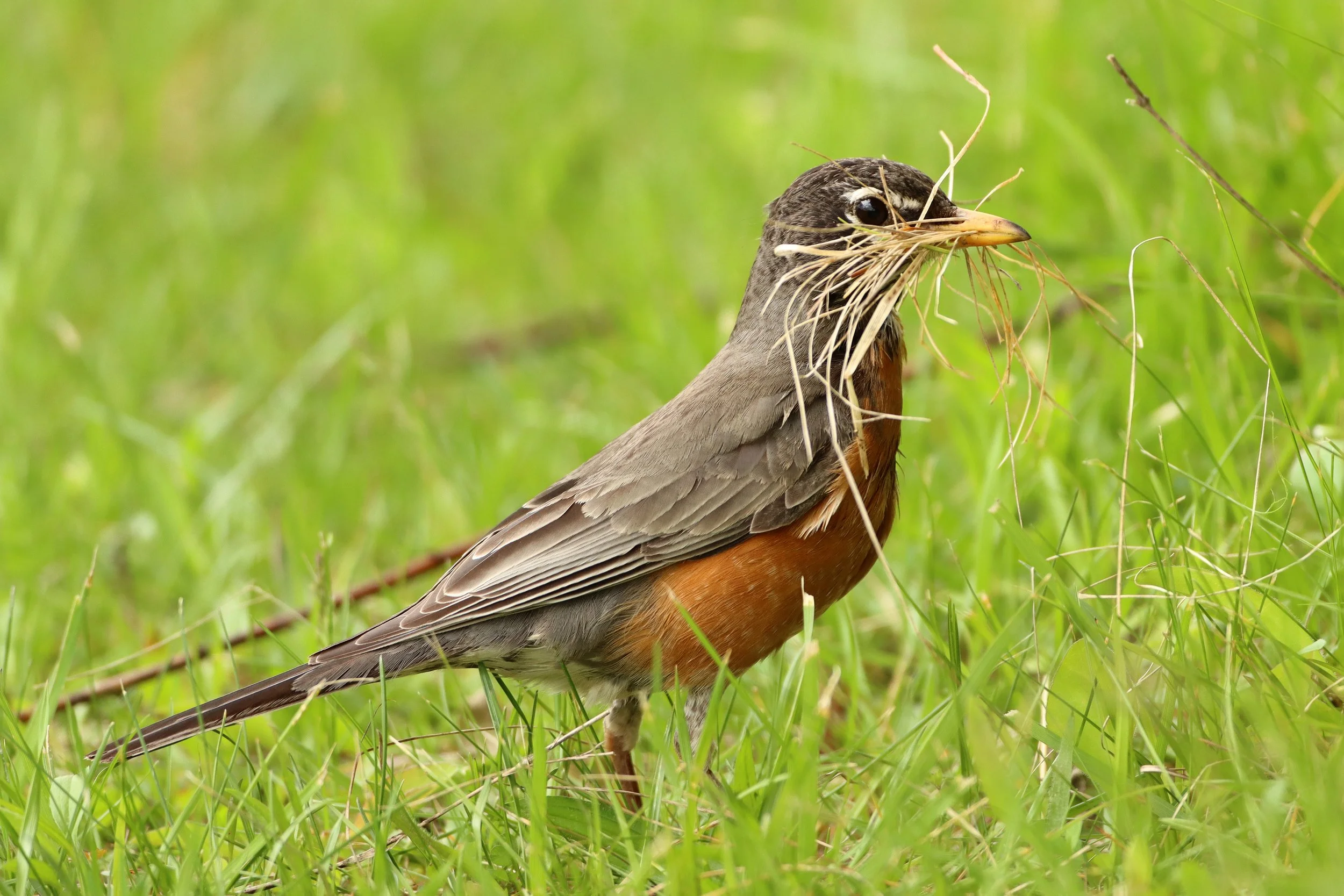
American Robin. Photo: Peter Wilson/Audubon Photography Awards
Individual: Is a bird carrying nest material? Sitting on a nest? In some but not all bird species, like the American Robin, only the female takes on these duties!
Two birds interacting: Are they handing off food items? Preening each other? Is one seemingly following the other? Will you be lucky enough to witness the split-second copulation that characterizes the breeding of most North American species?
2. Heading to the beach?
The Piping Plovers that have nested at Montrose Beach in Chicago have subtle sex differences and share nest incubation and parenting duties. But if you can see the color combination of their leg bands, you can look up which is male and which is female.
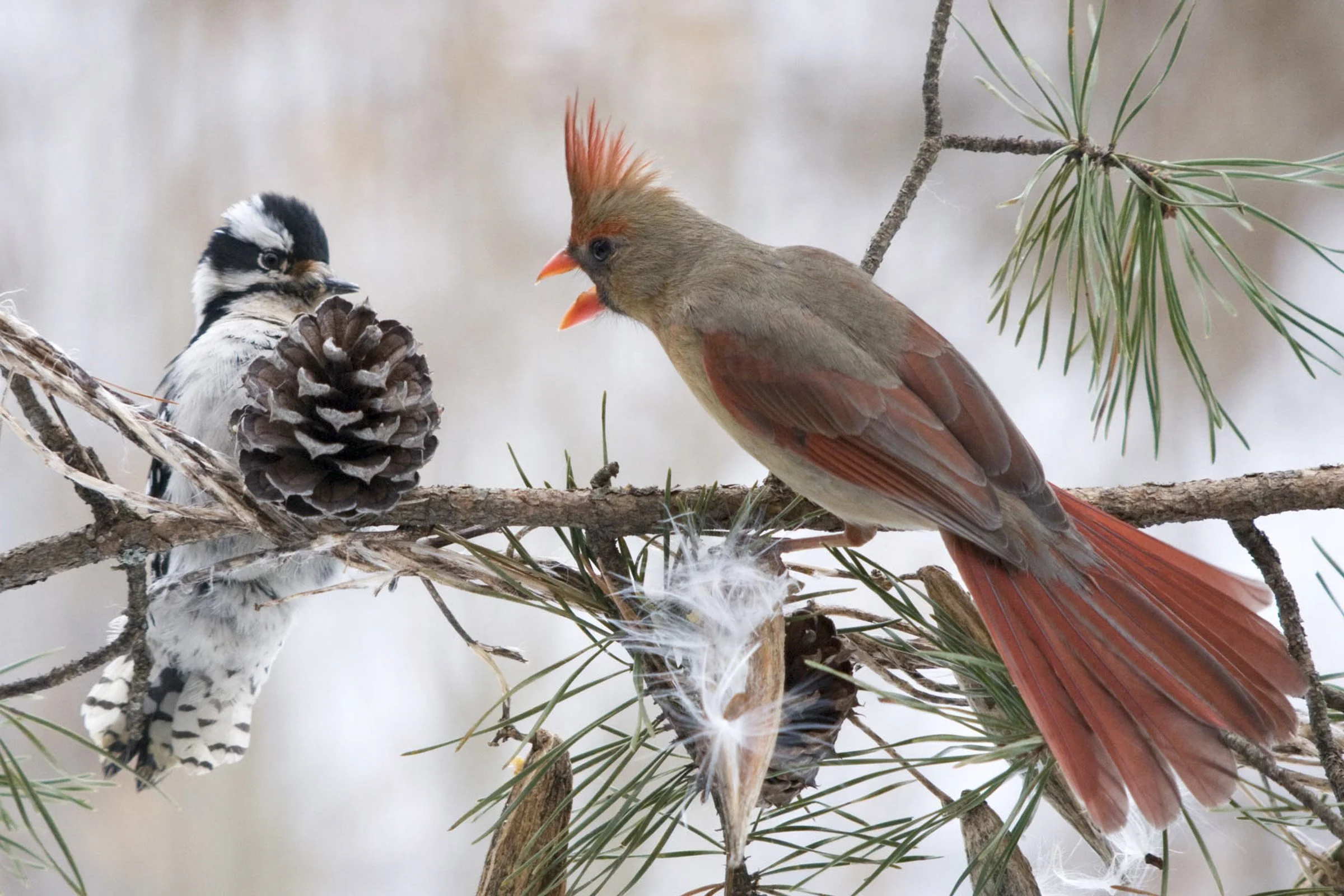
Downy Woodpecker and Northern Cardinal. Photo: Michele Black/Audubon Photography Awards
Ways to contribute/participate
If you go birding this weekend…
Need some gear to get started? Head to the Chicago Public Library to pick up a birds and birdwatching kit as well as borrow a field guide if you need it!
Share your female bird finds on social media with #FemaleBirdDay
Log sex information with your eBird sightings. Submitting eBird lists with sex info recorded on Female Bird Day can help contribute to our understanding of female-specific migratory behavior. Note: adding sex information in eBird is only available on the web browser version, not in the app. If you’re in the field and using the app, we recommend writing sex information in the notes field for species where you identified whether the bird is male or female, and then after you have submitted the checklist you can edit your checklist in the web browser to add age and sex details.
Snap a photo that could be eligible for next year’s Audubon Photography Awards Female Bird Prize
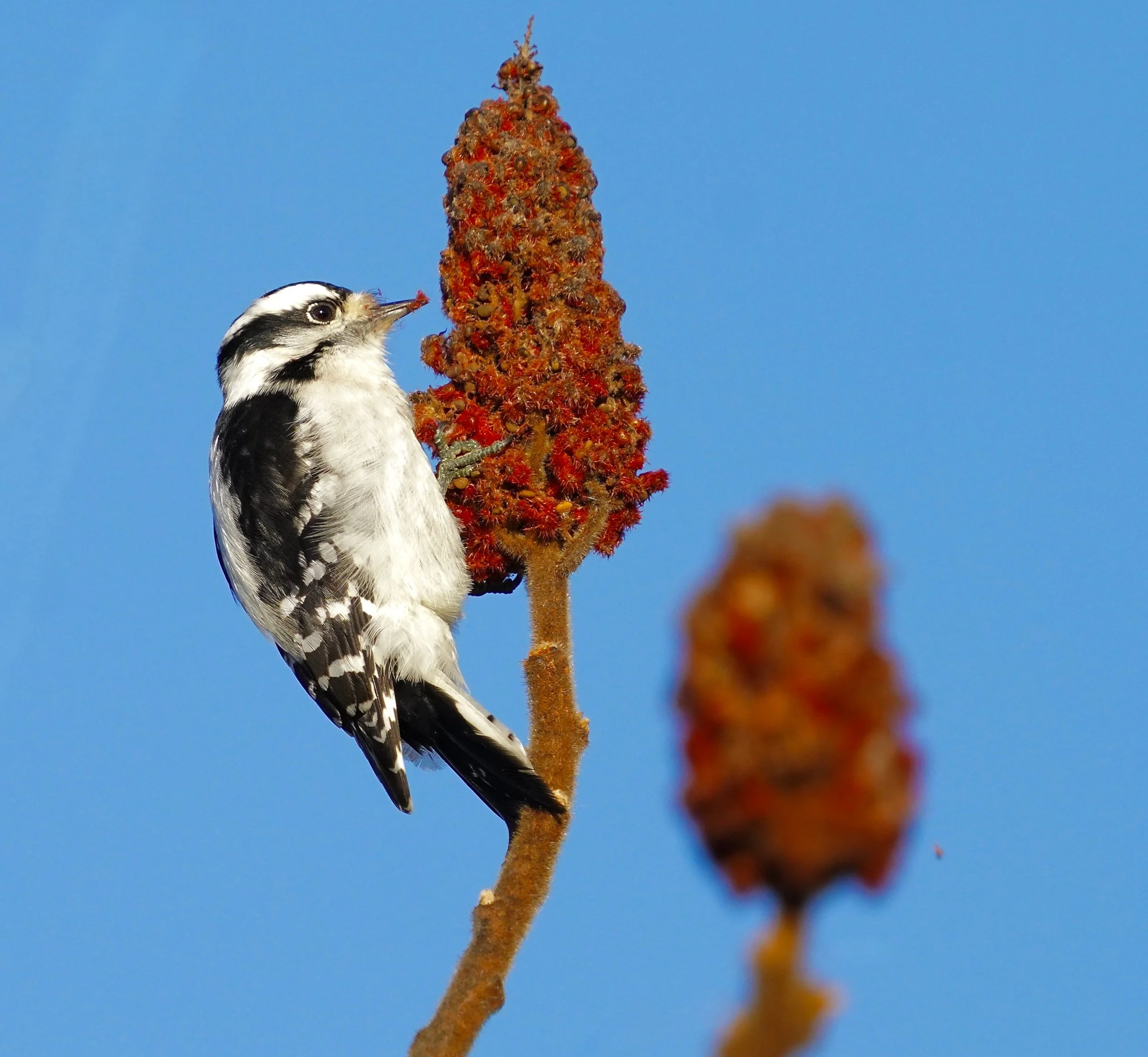
Downy Woodpecker on Rhus-typhina. Photo: Jennifer Shepherd/Audubon Photography Awards
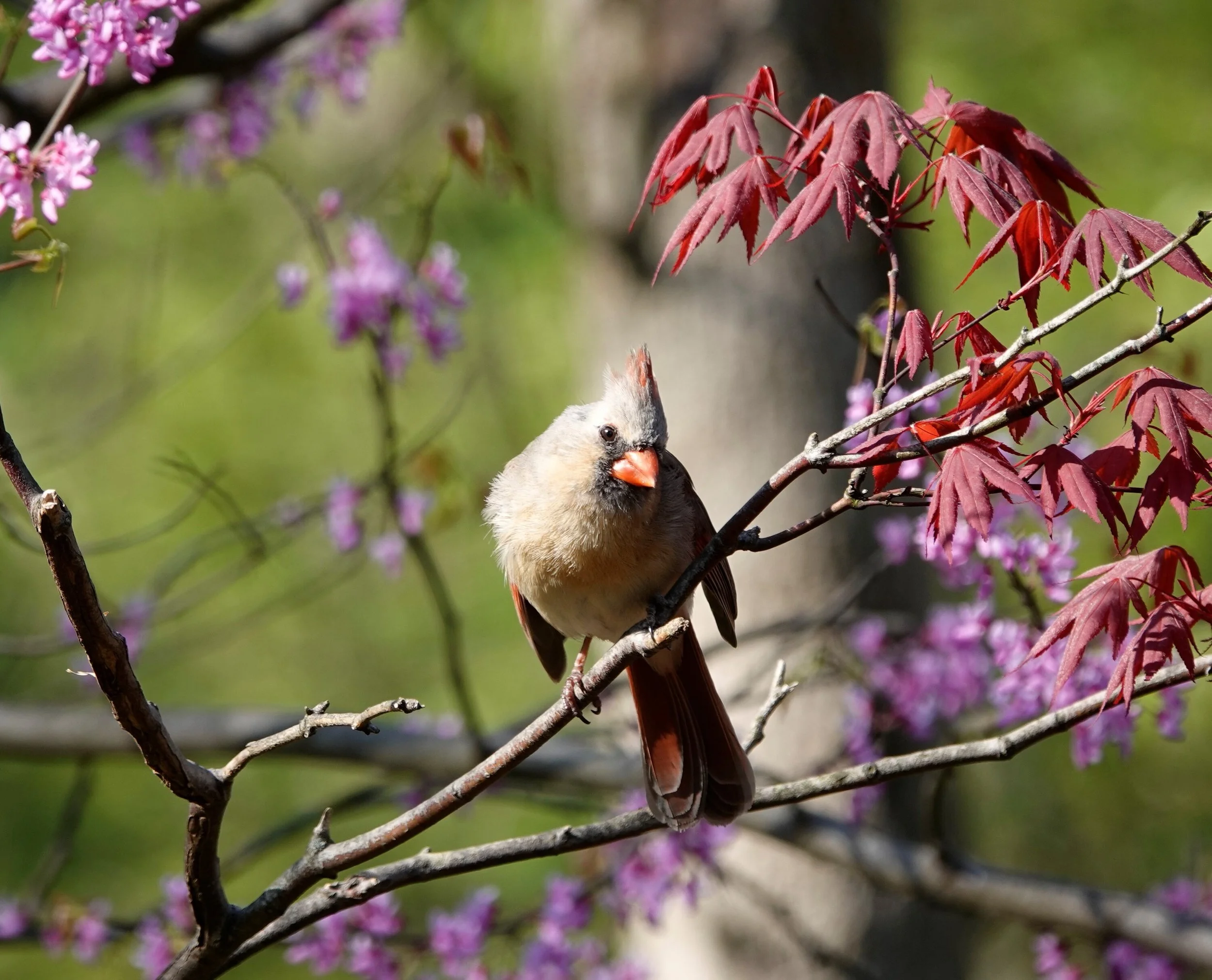
Northern Cardinal. Photo: Hali Grauvogel/Audubon Photography Awards
Planning for a rainy day?
Visit the zoo and observe bird behavior up close! What birds can you identify to be females, and how can you tell?
McCormick Bird House at Lincoln Park
Brookfield Zoo
Engage with us on social media, ask questions/give suggestions/share comments/what you’d like to see covered! (@galbatrossproject on Instagram)
Submit female bird ID tips on Female Bird Day website
Catch up on your backlog by submitting old checklists/data if you have them, to report e.g. wintering locations of female birds

Northern Cardinal. Photo: Deborah Lambesis/Audubon Photography Awards
Let female bird day be the starting point, not the destination! May today bring greater awareness of female birds, to encourage observations and reporting detailed sex-specific information via eBird year round.
Female bird ID resources:
About the authors: Both members of the Galbatross Project, Jess Gorzo is a Research Scientist with the New Jersey Department of Environmental Protection and Stephanie Beilke is a Senior Manager, Conservation Science with Audubon Great Lakes.