
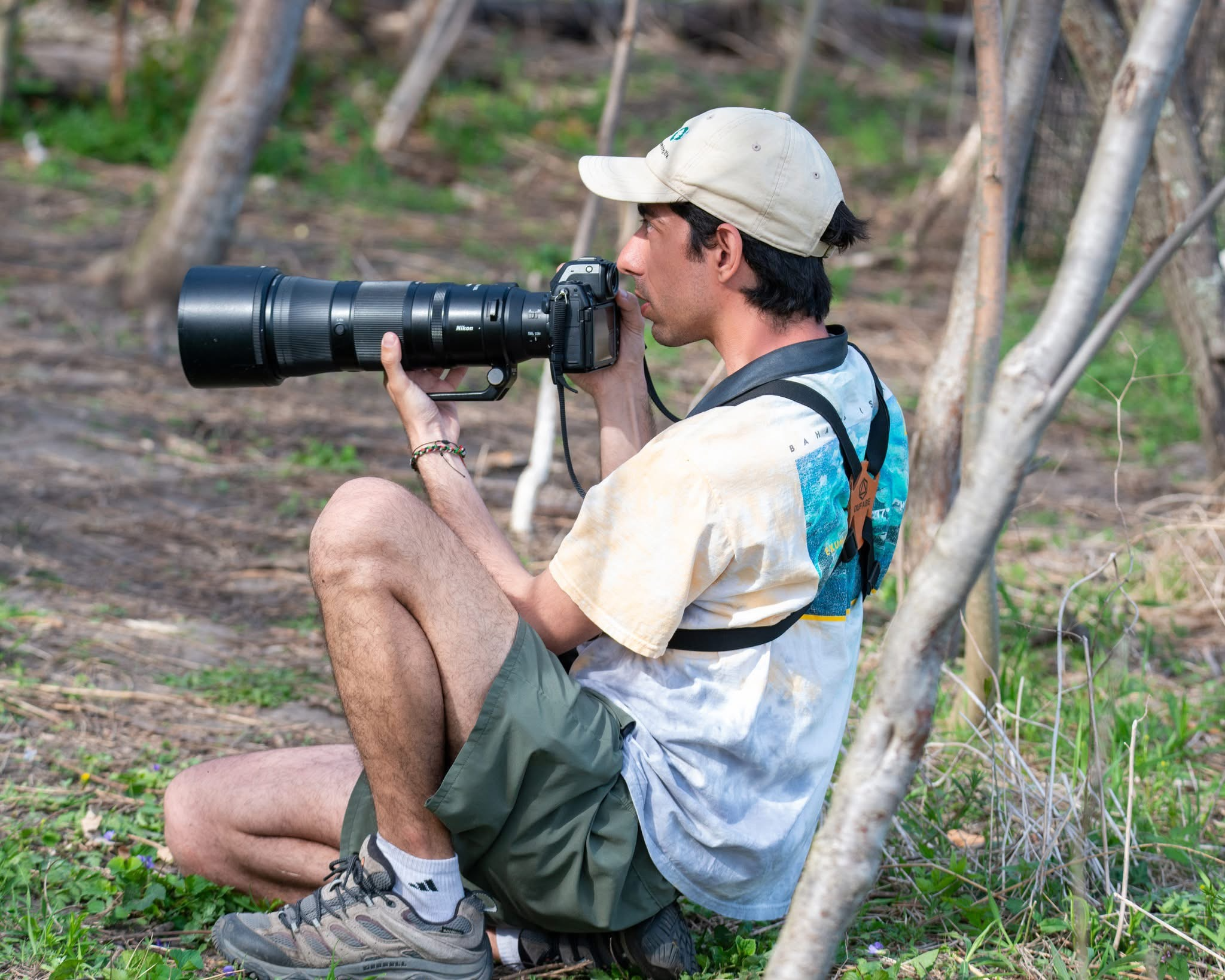
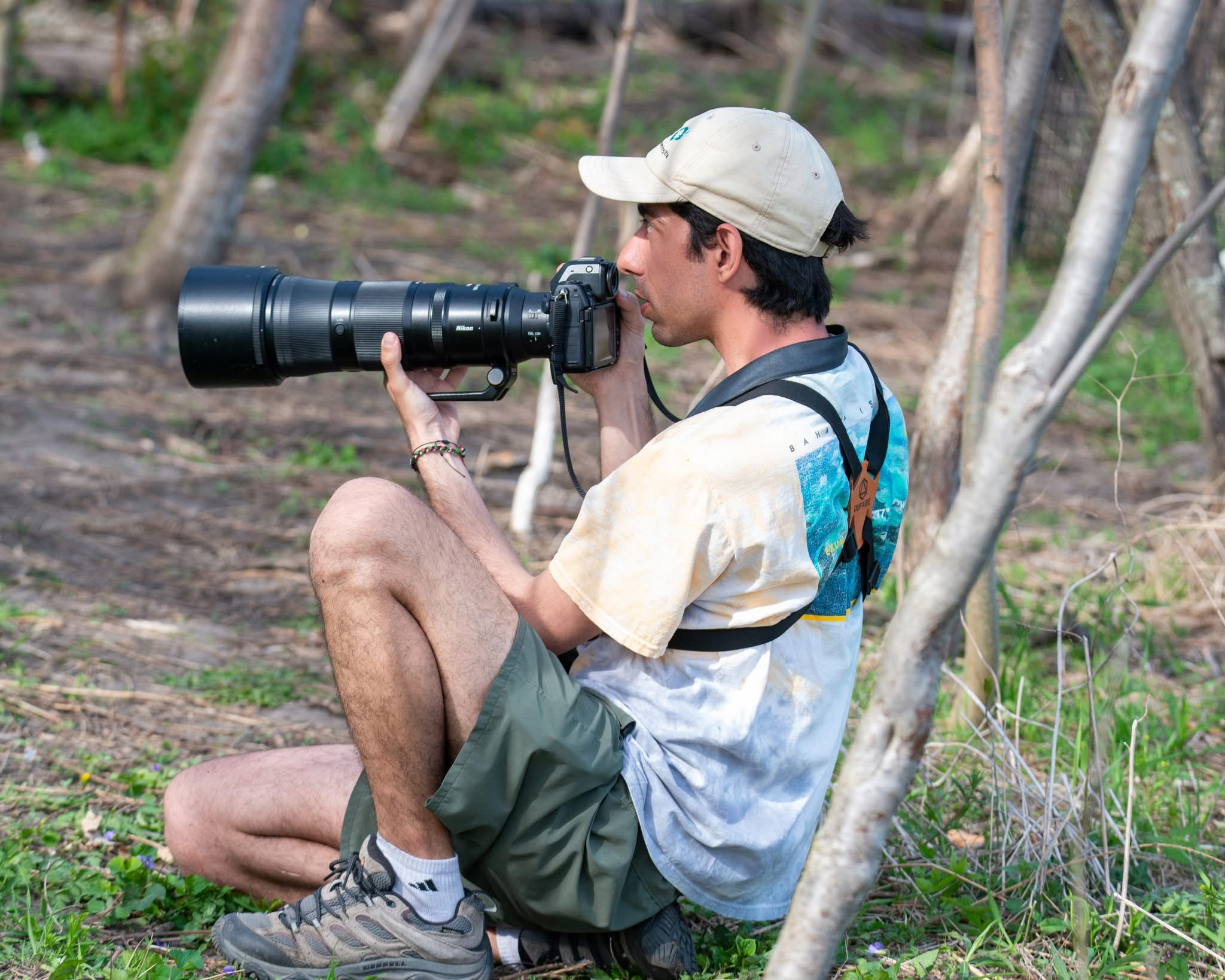
Tarik Shahzad is known for breaking Cook County’s Birding Big Year record twice in a row, first in 2024. Birding, however, is a relatively new hobby for him. Tarik grew up observing reptiles and animals, and that love for the natural world led to a career in environmental policy advocacy. He is currently an Environmental Government Affairs Associate for The Nature Conservancy and also sits on the CBA board.
When I called Tarik one Friday afternoon in March, he had slipped out of work early and was on his way to chase a Neotropic Cormorant. We spoke as he drove.
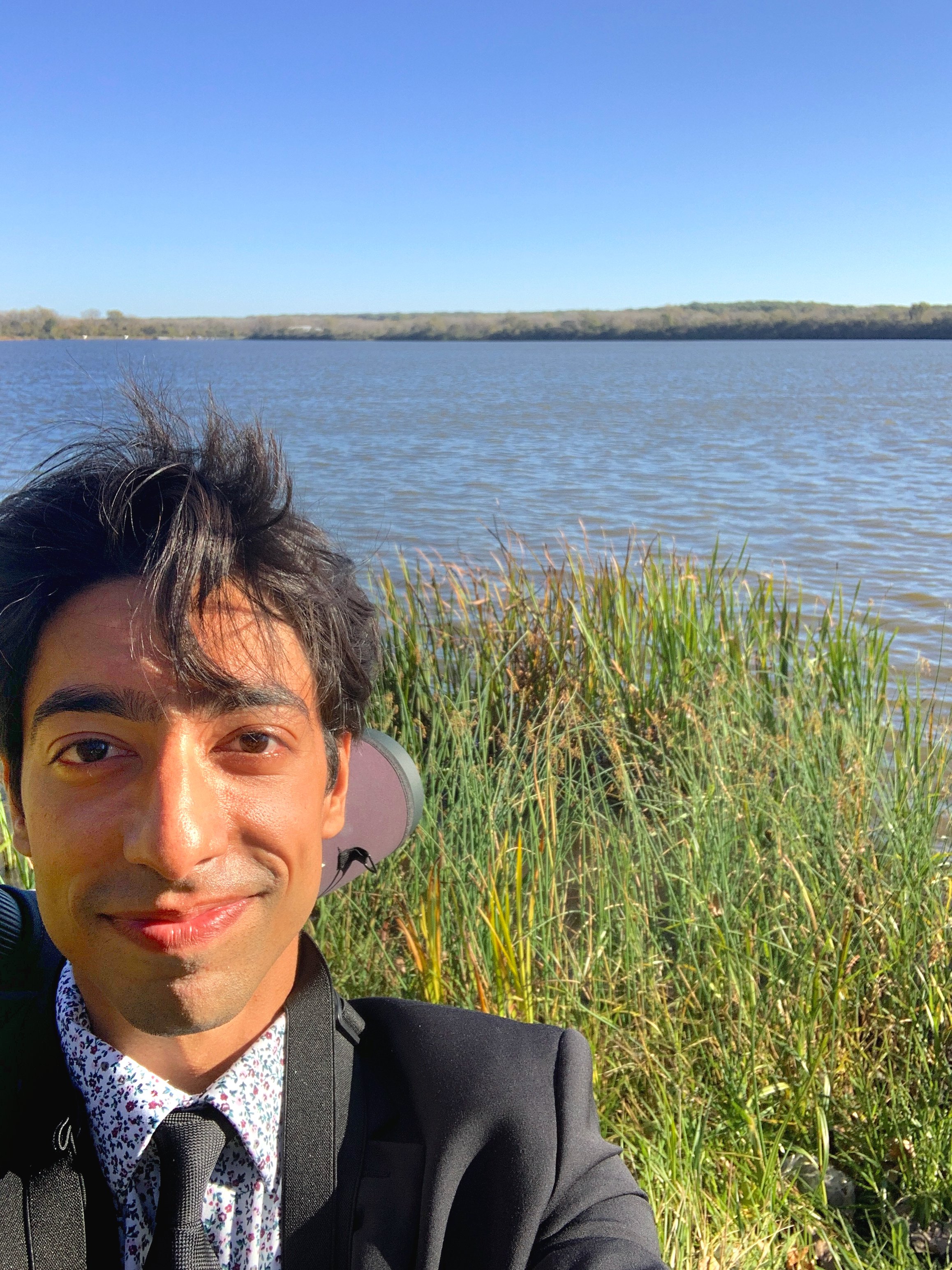
Tarik at the Saganashkee Slough Woods in work clothes.
Courtesy of Tarik Shahzad
Where are you headed?
My friend found a Neotropic Cormorant in Marquette Park on the southwest side. I live on the northwest side, so it's an hour and eight-minute drive, but I don't want to miss this bird.
It would be a county bird for me, and it's a really rare bird that only shows up every few years. And you know, they're quite difficult to pick out amongst Double-Crested Cormorants. My friend got an exceptional photo, and he confirmed it.
Neotropic Cormorants are supposed to be in the southern part of the United States, and they don't normally go north of Southern Illinois. And if they do, it's usually just because they overshoot in spring migration, or sometimes very few of them will spend the summer north of that latitude.
It's a trend that birds not usually seen in Chicago are popping up. You broke the birding big year records in Chicago with some of those. Are you doing another big year this year?
I’m not–I mean, I told myself I'm not. I had a lot of fun for two years in a row and it's a big time commitment. You make a lot of sacrifices with your social life, and it's also a monetary commitment with the gas and the miles on your car.
This year, I'm gonna take it more chillax. I only want to see new rare birds. If something like a Worm-eating Warbler showed up, which I've seen before in the county, I wouldn't rush over. But I still want to drop everything if something uber rare comes up, but that's just being a birder.
You also do environmental advocacy work. What do you say to people who have concerns about the environmental impact and carbon footprint of competitive birding?
There's no denying that there’s a carbon footprint with any of our birding activities, specifically when you're driving. That's just a fact of the infrastructure of the United States, where we don't have the same sort of public transit systems as other parts of the world. I also feel that doesn't mean we should restrict ourselves and not enjoy birds we want to see just because the system that is out of our control isn't as green.
There is indeed a larger carbon footprint with rare bird chasing if you decide to do any sort of county or state listing. It's still quite minuscule in the grand scheme of things if a few people go chase a rare bird on a road trip, the same way people go on road trips, go camping, or to see their families. Sometimes people just have to go to work, and that has carbon footprints larger than you'd think.
When we're talking about climate change and how we need to act, it has to be on a holistic, systemic level. There needs to be changes in state and federal law, and even international law, in order for us to really combat the climate crisis. While individual actions do matter, it's more about community and holistic group action than it is policing individual people's actions, especially if they're just going on basic road trips.
That’s much of the work you do as a government affairs associate.
At The Nature Conservancy Illinois chapter, I work on the government relations team. A lot of it is being an advocate for people in nature, which means talking to people of all political persuasions, and even those who are not political.
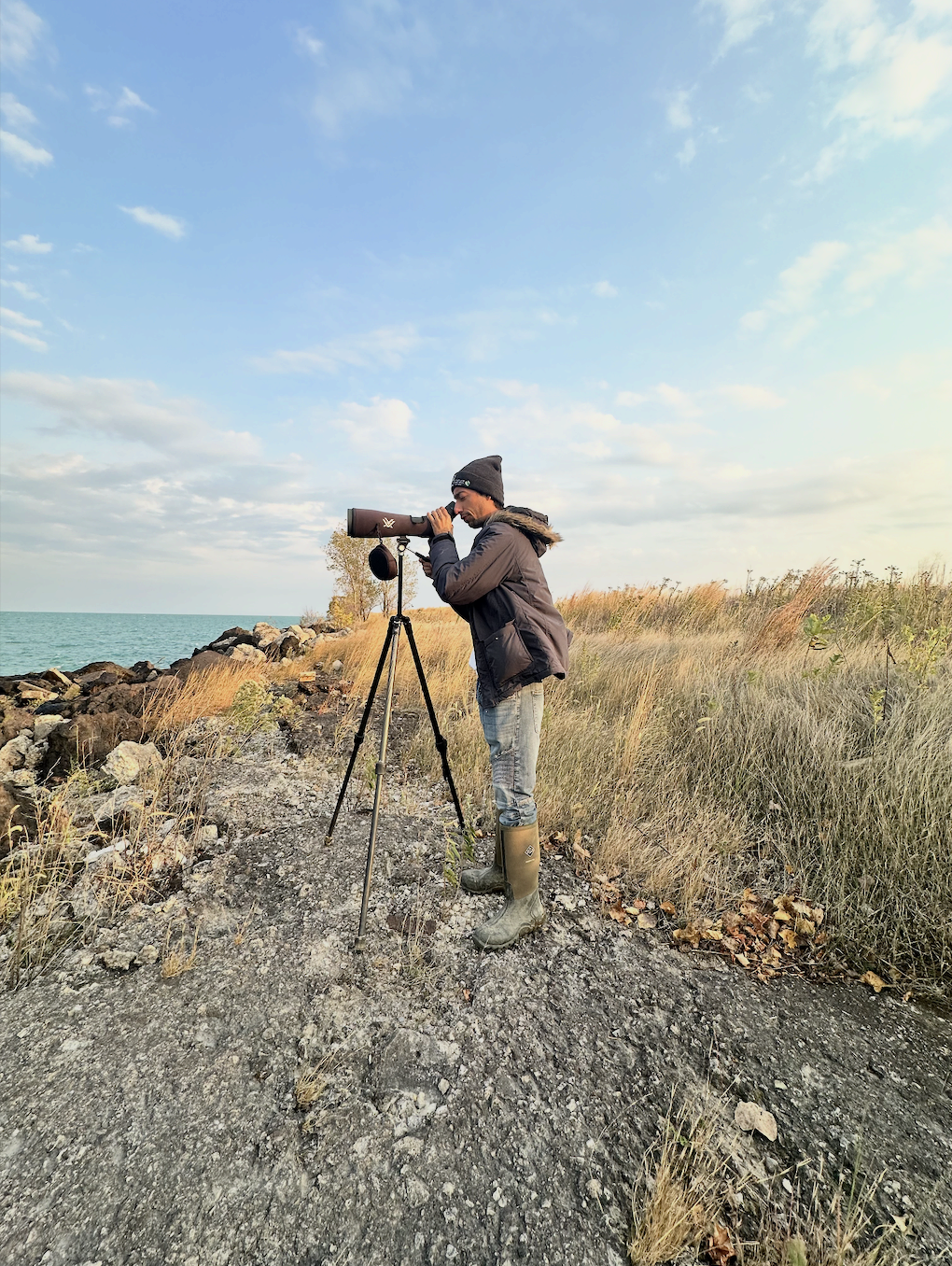
I work on state and local policy. I work on the state-level wetlands campaign, trying to pass the Wetlands Protection Act. I advocate with elected officials and work in coalition with environmental partners across the state to raise awareness about the importance of wetlands
Courtesy of Tarik Shahzad
Community and group actions operate on a very different level and timeline from policy work. Since you're involved in both, what are your thoughts on how the two could coordinate?
Environmental and bird advocates need to showcase constituency and the salience of their argument. Those in power will not acquiesce without a demand and we showcase demand through constituency and voting, showing up and advocating and lobbying. Really, strength in numbers is critical.
That's why I love that birding is skyrocketing as a hobby. That's going to have more and more people fall in love with birds, make it their hobby, their life passion, and then they're going to care more. They're going to talk about it more with their friends and family. It's going to create a snowball effect where eventually it'll move up to the ears of our politicians and our lawmakers. And so that's the way that we can, I think, bridge community-based advocacy and networking with changing systems and laws.
Is there an example in which this process has worked?
Recently, some folks up in the federal government wanted to sell off our public lands. Less than a year ago environmental groups and stakeholders from across the country banded together on short notice to advocate against it and put a lot of pressure on those in Congress, especially those in the Senate. Ultimately, it was rejected.
I imagine that's a bipartisan coalition as well.
Absolutely, and that's a keyword. Bipartisan is really important because a third or so people don't vote, but the other two-thirds are split between Republican and Democrat. While there are several million differences, it's very close to being in equilibrium.
To convince people of all political stripes, you need to frame environmental issues differently. What's so great about bird advocacy and conservation is that at the end of the day, everyone's mission is the same, especially in the hobby of birding. I know birders across the political spectrum, but they're all birders for one reason: because they love birds.
Is there a particular issue you frame differently for separate audiences?
When it comes to the loss of habitat, you have more conservation-focused, very environmental, environmental-adjacent, sometimes more left-leaning folks who want to protect habitat for conservation purposes and for the welfare of wildlife.
And then you may also have more right-leaning folks, just on aggregate, who may not agree that we should protect natural spaces just for the welfare of some specific species. But if you frame it in terms of the other benefits that derive from its protection–perhaps environmental benefits of having clean air and clean water–depending on how that person prioritizes fiscal issues, these benefits might fall on their priority list.
Has there recently been a deprioritization of environmental protection by voters and policymakers?
The salience of environmental issues has rapidly dropped in the last couple of years, especially on the federal level. We're dealing with a lot of unprecedented issues in other categories. People's livelihoods are being impacted in so many unique ways now. We've slowed down on our federal progress when it comes to climate change. We’re losing more habitat, and we're not funding our environmental agencies enough.
This is also true on the state level, though in Illinois, our legislators have really doubled down on climate action. We have a robust environmental advocacy community, and I'm glad to be a part of it. We could be doing a lot better on conservation, but we have to build that power and that constituency. Climate advocates have done a really good job on building power, but we bird advocates and conservation and wildlife advocates need to replicate that.
And it doesn’t have to be a zero-sum game. It’s not that if we work on birds and conservation, then we'll lag on something like health care. All these issues are interconnected. If we work to protect natural spaces and birds, we're also cleaning our air and making sure we have clean water, which will definitely impact our health.
Courtesy of Tarik Shahzad
What made you decide to work on environmental policy specifically?
I went to Middlebury College specifically because they have the oldest environmental studies program in the country. I have always had a passion for improving the world, and one way to do that is through policy. I really wanted to make a difference in people's lives, especially when it comes to connecting them with nature and protecting nature for future generations. I fell in love with nature as a kid. I always knew that I wanted to do this.
It wasn't so easy at first. It's really a more niche kind of job, and the job market's been really competitive, especially after COVID. I graduated during COVID. The first few jobs I got weren't in environmental policy.
What were the previous jobs, and what kept you looking for opportunities that are more aligned with what you wanted to do?
Well, I'll just admit part of it was the privilege. I was able to live at home for the first two years. I'm so thankful for my mom that I was able to take lower-paying jobs. The cost of living is so high I don't think I would have been able to do that if I were living on my own.
I ended up doing internships in government-relations type work. My most recent job before this one was a habitat restoration internship with Audubon Great Lakes, which is environmental conservation on the ground. It was really important for my resume and to inform my perspective on the environment in Illinois and Chicago.
It takes a lot of privilege and luck. If TNC didn't hire me, I would’ve had to pivot to something a little bit more benign and typical and stable. I would’ve just done environmental advocacy and volunteering in my personal life. You can always be an environmental champion. You don't need to do it as a career. This is just something that I dreamt of doing as a career, and I got lucky.
Did you grow up in Chicago?
Yes, on the northwest side. I grew up in the Norwood Park area, and I wasn't interested in birds much at all.
I was mostly interested in herping, like looking for reptiles and amphibians. I loved wildlife and mammals. As a kid – I still have this dream now – I have this laundry list of bucket list animals that I want to see in the Amazon, in the Indonesian rainforest, in Australia. I still remember all those birds I listed as a kid that I still want to see. It's still my dream to see a lot of those animals, but I didn't have many birds on there. It's not until 2022 that I really fell in love with birds and birding.
What is your family like?
My mom worked in market research, and my dad was a cab driver. They are both immigrants – my mom's Bosnian and my dad's Pakistani. They met in former Yugoslavia, so I'm second-generation.
Do you think that has an impact on the work you choose to do?
A lot of kids of immigrants will say your immigrant parents will really push you to get a high-paying, stable job, this American Dream type thing. And I will admit, if I were to have become a doctor or lawyer, I'd be making a lot more money. Maybe I'd have a house and whatever, but also that's not what I want. That's not what I fell in love with as a kid.
I think part of the American Dream idea was to build a career in what you want. At first, my parents mostly just pressured me to be a good student. They really demanded I get straight A's, starting in elementary school. But they both, especially my mom, really pushed me to just do what I love, and that's because they both came from war-torn countries, and they came from places where life was difficult, and even here, life was difficult. They had a perspective that, yes, you need to work hard and do right by yourself financially, but we also need to enjoy life, and they struggled a lot. So I took that to heart.
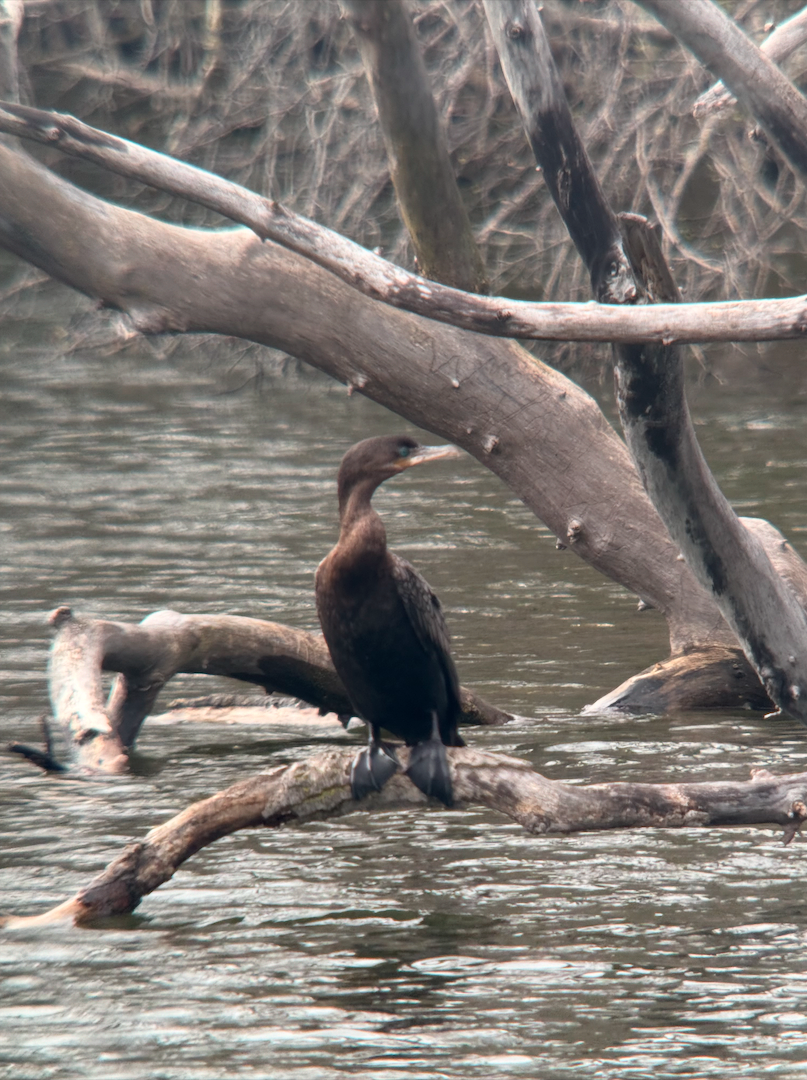
Neotropical Cormorant at Marquette Park
Courtesy of Tarik Shahzad
After our call was over, Tarik was able to find the Neotropical Cormorant. When I asked him if he felt he was achieving that dream, of doing what he loves, he didn’t hesitate to say yes.
“As a young person in this world, the cost of living as well as the environmental crises we're facing are compounding. You and I and other younger people are going to be facing the brunt of climate change, more so than older folks, in several decades from now.
“Despite that, I feel really supported in my work. I get to work alongside amazing people on really important issues. Even if we don't win most of the time, the fight is as important as the victory, in some cases, because you can always build up to the next fight. The work can sometimes be difficult and draining, but working with like-minded individuals is really special.”