
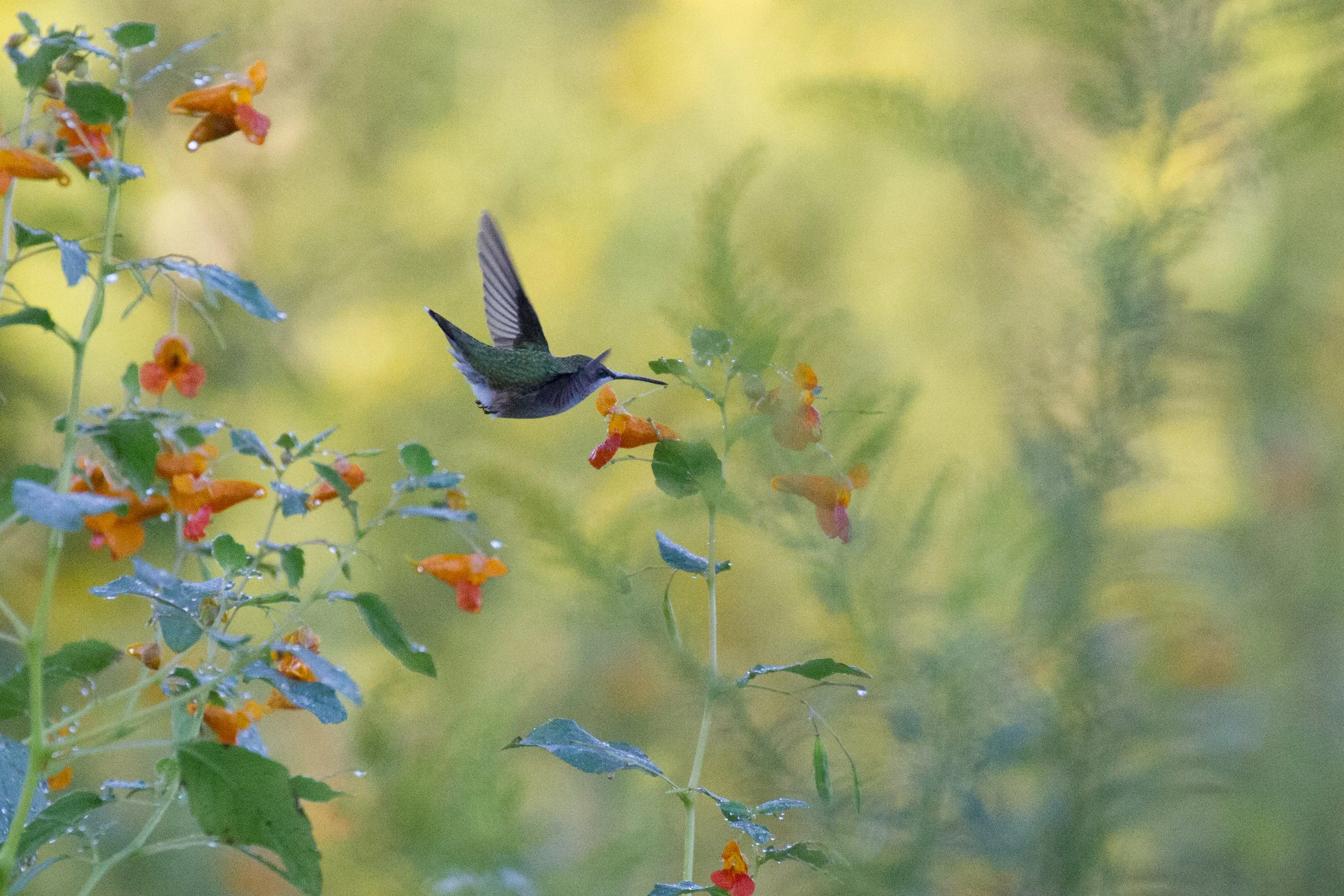
It may seem obvious that birds are heavily reliant on plants to survive – they nest in trees, they eat berries and seeds for sustenance, and they feast on the insects that use flora for their own advantage. But not all bird-plant relationships are equal. While our native birds may seemingly be acclimated to non-native plants, the latter don't offer the same value as native plants, which evolved alongside their avian counterparts and provide the food birds need, when they need it. In other words, not every green space is equally advantageous.
This disparity in benefit is driven in part by the number and diversity of insects that are attracted to native vs. non-native plants. More than 90% of herbivorous arthropods only eat a specific or a handful of native plant types, which means a decline in insect diversity if those plants are taken away. In addition, research around the effect of non-native plants on Carolina Chickadees in Washington, D.C. has shown that the increase of the former has caused a decline in insect availability. This detrimental consequence then forces the songbirds to find less desired food and lay fewer eggs, or eschew reproducing in areas without native plants. To combat this, the researchers recommended that at least 70% of total plant biomass in an area should be composed of native plants. Furthermore, if a bird is relying on fruit for part of its nourishment, non-native plants have less fat content and energy density in their produce vs. native plants, making their fruit nutrient-poor in comparison.
Plants also depend on birds, to varying degrees, for seed dispersal and pollination. In fact, taking into account birds from all over the world, about 12.5% of them pollinate flowers in some fashion. Below are three examples of harmonious bird-plant pairings that can be witnessed here in the Chicago area:
Blue Jays & Oak Trees
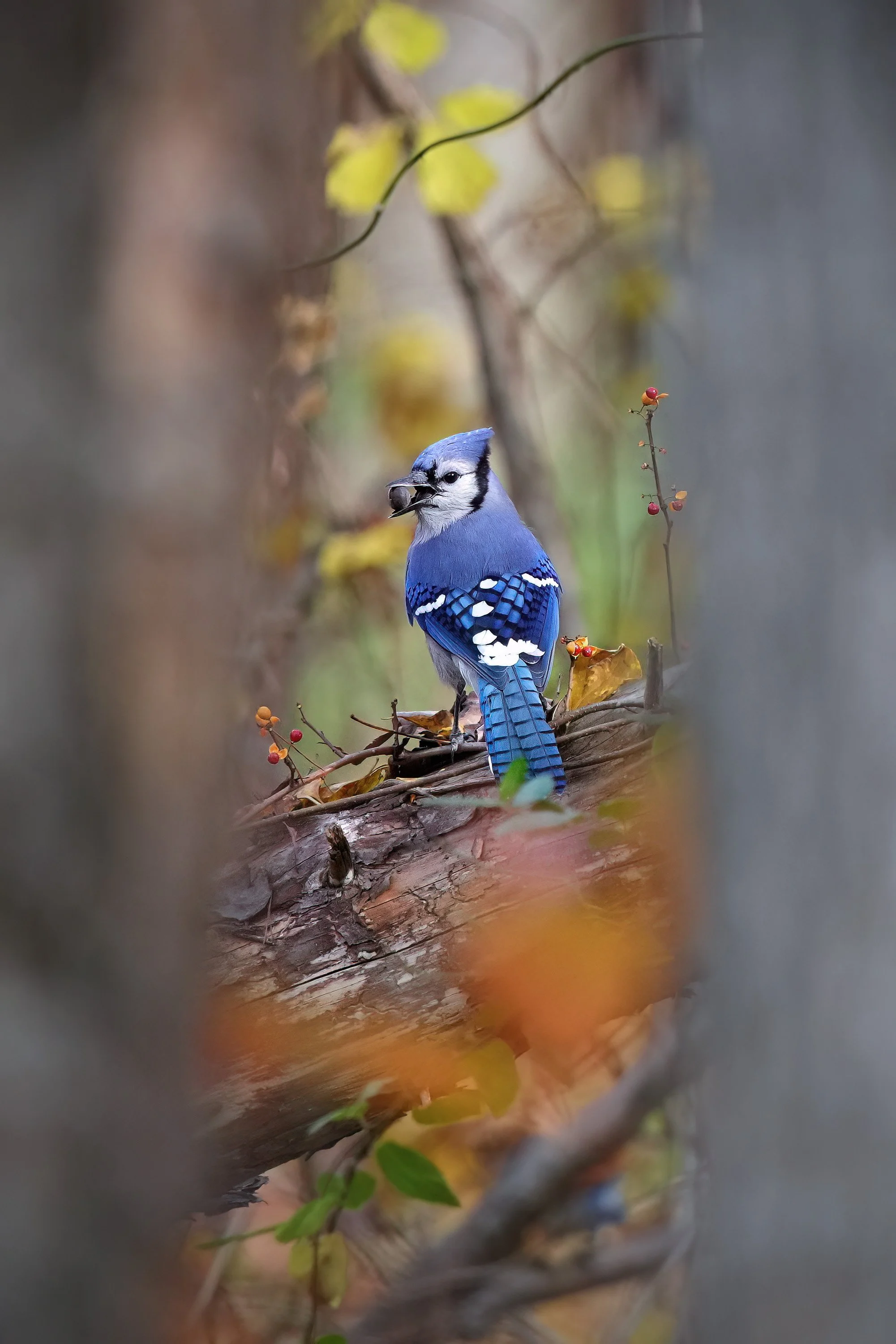
Blue Jay with Celastrus orbiculatus (Asian Bittersweet) and an acorn of Quercus sp. (Oak), Huntley Meadows Park, Alexandria, Virginia
Eric Steiner/Audubon Photography Awards
Out in the west, whitebark pine is heavily reliant on the Clark’s Nutcracker to scatter the tree’s seeds. The bird, whose beak is specialized to force open the pinecones to extract the nutrient-rich seeds within, will cache these seeds and oftentimes forget their location, allowing the pines to grow. Here in Chicagoland and elsewhere, the nutcracker’s corvid cousin, the Blue Jay, plays much the same role for the oak tree. Acorns are a key food source for these jays, and they have a hooked beak perfect for prying off an acorn husk. Blue Jays are known to cache food, and they will hide thousands of these nuts in a year; favorably for the tree, they will also forget where they hid a large percentage of them, one estimate being around 75%.
Although squirrels are regularly associated with acorns and oaks, they cannot spread out acorns like jays do. While squirrels may conceal seeds as far as 200 feet from the original tree, Blue Jays may fly a mile or so before depositing a seed. Their ability to travel long-distance and hold up to five acorns at once helps oaks enlarge their range. Blue Jays are also skilled at discerning viable nuts and will avoid those with boll weevils inside. The larva of these beetles will eat the flesh of an acorn and thus render the seed unable to grow.
American Goldfinches & Purple Coneflowers
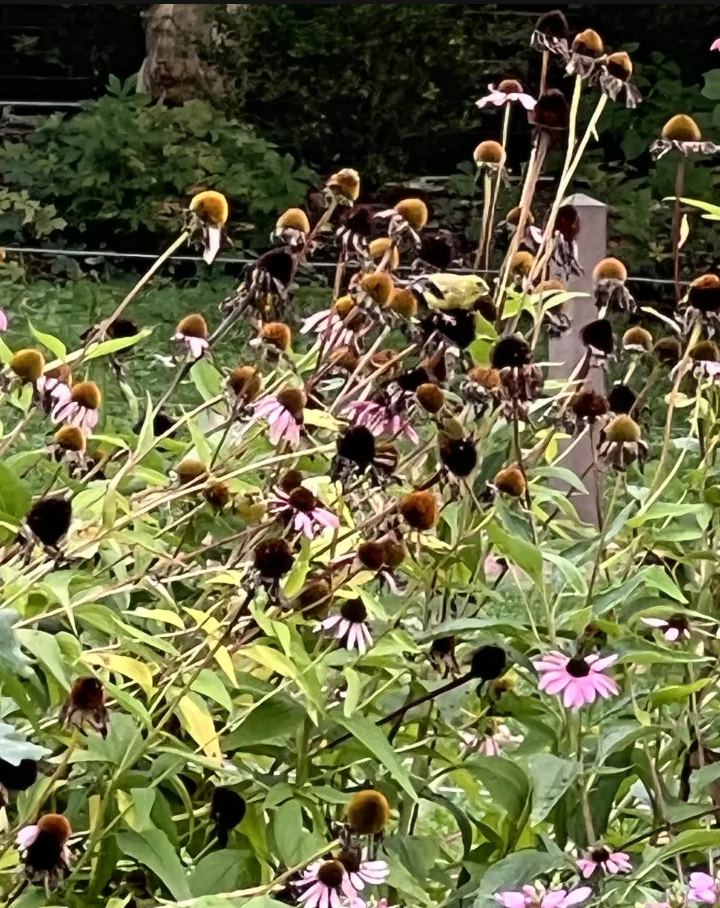
An American Goldfinch on a purple coneflower at Lincoln Park Zoo
Multiple birds enjoy the purple coneflower, but it seems to be a favorite of the American Goldfinch. This little songbird primarily feasts on seeds and will raise its young on that diet as well. Because of this, they will nest relatively late, typically in July and August, when seeds are more plentiful. If you grow coneflowers in your yard, consider leaving them be as the weather grows colder and the petals shrivel up. They may look unsightly, but the no-longer-vibrant flowers offer a bounty of food to not only finches, but other birds such as chickadees, quail, and cardinals as well.
Ruby-Throated Hummingbirds & Tubular Flowers
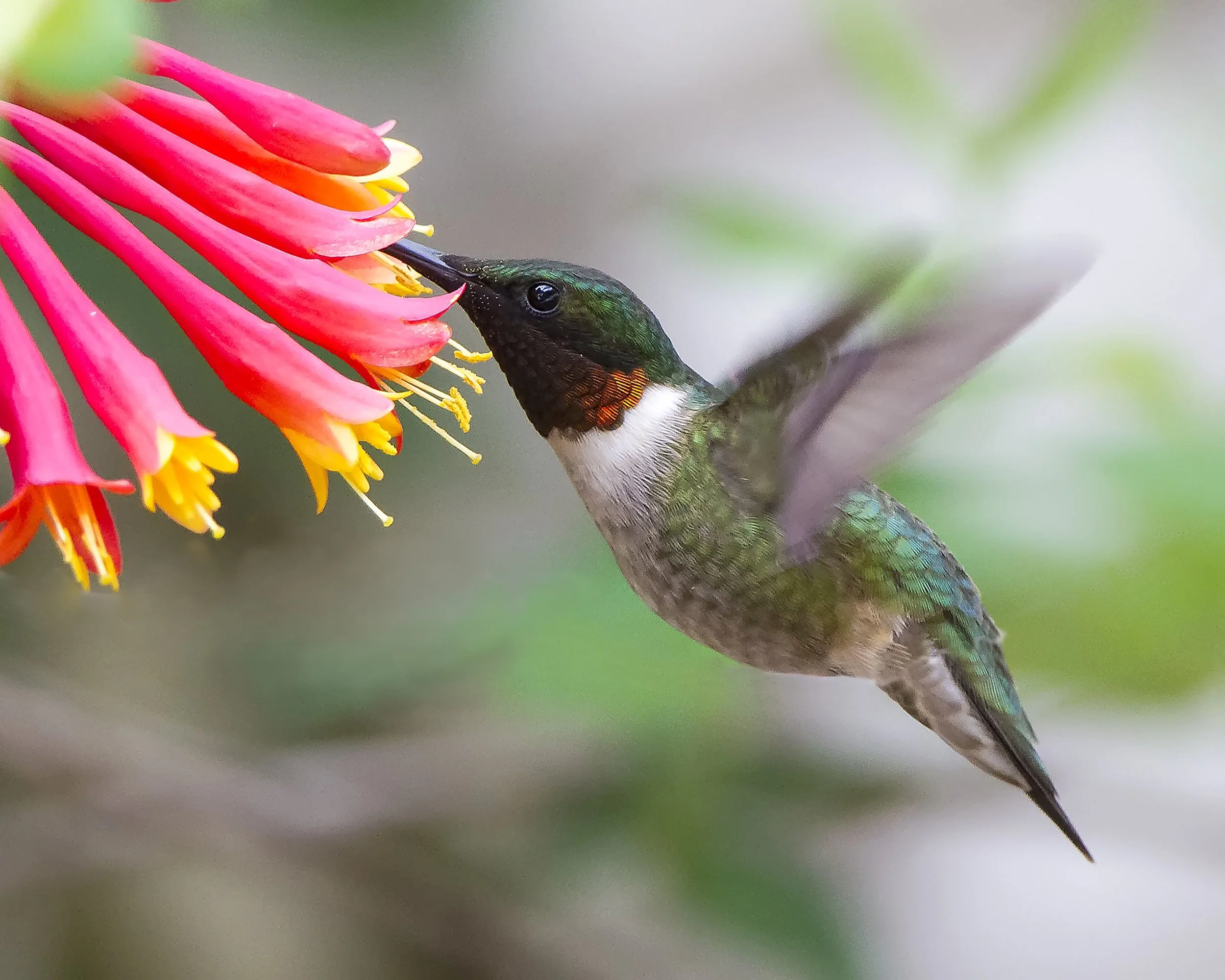
Ruby-throated Hummingbird, Trumpet Honeysuckle
David M. Shipper/Audubon Photography Awards
When pollinators are discussed, hummingbirds are often mentioned as one of the usual suspects. Here in Chicago, there is one species of Trochilidae that regularly graces the city every year: the Ruby-throated Hummingbird. With its long, skinny beak and critical need for high calorie meals, tubular nectar-producing flowers are much desired. The spotted jewelweed is one such flower, evolved with a curved spur used to store nectar. The hummingbird can pull the jewelweed towards itself to attain this nectar, and this motion causes pollen to fall on its bill. Once feeding concludes, the orange-colored flower benefits when that bird carries away said pollen to the next bloom they visit.
If you want to be extra certain of getting Ruby-throated Hummingbirds to your yard, take advantage of the fact that hummingbirds are attracted to the color red. The trumpet honeysuckle grows in shades of orangish-red to scarlet and is one of several reddish-hued flowers that both thrive in Chicago and appeal to hummingbirds, bees, and butterflies. There are many other examples of bugle-shaped flowers of various colors that have evolved to entice long-tongued pollinators, an example of coevolution.
This year if you can, help out birds by planting their ideal vegetation and watch both flora and fauna flourish. Look out for CBA’s native plant sale coming up in the spring to get started or to continue your work creating bird-friendly habitats!
Resources:
Intro:
https://savedunes.org/living-in-the-dunes-volume-3/
Nonnative plants reduce population growth of an insectivorous bird | PNAS
Habitat in the city: the power of the single yard | Friends of the Mississippi River
The Connection Between Flowers and Birds
Why Native Plants Matter | Audubon
Blue Jays:
Species Spotlight - Oaks (U.S. National Park Service)
Is the Fate of Whitebark Pine in the Beak of Clark's Nutcracker? (U.S. National Park Service)
American Goldfinch:
10 Plants for a Bird-Friendly Yard | Audubon
Skip the Bird Feeder - Lady Bird Johnson Wildflower Center
Out My Backdoor: Feed Birds With Flowers in Fall | Department Of Natural Resources Division
Purple Coneflower — Sustainability Matters
American Goldfinch | Audubon Field Guide
Grow Coneflowers to Attract Butterflies and Birds
Ruby-throated Hummingbird:
Hummingbirds part of intricate web of relationships
5 Native Plants That Attract Ruby-throated Hummingbirds - Heritage Conservancy
Totally Tubular - Dyck Arboretum
Beginner's Guide to Native Plants for Birds | Audubon
Plants That Attract Hummingbirds | Chicago Botanic Garden
Plant Watch: Jewelweed - Marblehead Conservancy Inc.
Trumpet Honeysuckle - Lonicera sempervirens – Bagley Pond Perennials
Bird Pollinators | U.S. Fish & Wildlife Service
Jewelweed - Loudoun Wildlife Conservancy
Flying Jewels: Gardening for Hummingbirds | Chicago Botanic Garden